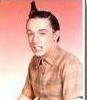
I saw Michael Eisner on the Today show this morning.

Eisner is was and always will be a pompous twit. He's the laughing stock of Hollywood, but who knows, maybe he'll be able to give me insite into the life of Goldie Hawn that until now I was sorely missing.
 
grimley1968 said:
He also modernized the WDW resort system. Before Eisner, you had the Poly, CR, the campgrounds, and maybe GF (I could be wrong on GF). All except the campgrounds were too expensive for the average middle-class vacationer. During Eisner's time, these choices grew exponentially, with the addition of more affordable Value and Moderate resorts that still have "magic" to them, and also some other nice Deluxe resorts (WL's my fave addition).

And you can't forget the transportation options. Before Eisner, WDW had the monorail system, a ferry boat, and maybe the small water taxis between GF, Poly and MK. I'm not sure any of the current busing system existed before him. The upgrade in the transportation infrastructure has really improved the quality of WDW vacations, about as much as the newer resorts, IMHO.

Average Americans were flooding WDW before the lower-priced WDW resorts were ever built.
I see you stayed at the Poly in the early 70's. So did we.
It was actually very affordable then (much cheaper to stay THERE than at the DL hotel in California at that time).
But people mostly just stayed OFF-PROPERTY before the economy resorts were built at WDW.
I love that we can now stay ON-property at even better rates.

There was no NEED for buses back when all there WAS at WDW was MK, Epcot, Poly, Contemp, and FtW (GF came MUCH later).
The busses came into play as the new resorts and parks were added with no monorail service to them.
I'm not saying if it was a "genius plan" or not... but it EVOLVED only out of a NEED that was not there before greater WDW expansion.
 
As some others have said....................Eisner did great things for Disney, but he did it in tandum with other team - members.

Some people are not able to properly function without accountability. This is why most companies operate on a board system and report to share-holders.

The thing about Eisner is, when Wells died, he had this uncanny way of intimidating the board members who were to hold him accountable (I am sure this was because they likely saw his attitude before Wells died, and knew when Wells died that he was going to have full control over his own personality with no accountability).

Eisner is a man who needs accountability. He's a man who does not have enough moral substance to do the right thing many times without someone to keep him accountable.

Eisner became very arrogant (or more likely got to show his already sustained arrogance) after Wells died. He ruled through intimidation.

He did make the parks better but dont kid yourself. He didn't do all he could and he took a selfish approach to most things.

I remember that after 9-11, granted they claim they didn't "lay" people off, they did do a hiring freeze and I believe they did let some part timers go. They cut the park hours (This year, March park hours were past midnight, whereas after 9-11, the same week, the Magic Kingdom closed at 8:00).

Tourism was down and the money was tight. However, Eisner found it in himself to pay himself a $60M bonus that year.

I think he did good things for the park but if you look at his reign since Wells has not been there with him, he's been a scary figure for most Disney fans.

Also, anyone who saw the interview with Larry King can attest to just how arrogant he is, when callers called in to question him (the one's that were smart enough to slip through King's producers who were OBVIOUSLY screening out all difficult questions) he responded to them nearly in anger and then rubbed in our faces how he played in the parks at night when they were closed and said "those are the perks of being CEO of Disney".

Then he bragged how he was so clever to find Walt's grave, since "nobody" knows where it is, even though you can find the exact location and photos of it online.

He is just so arrogant and moral-less. It's people like him that honestly make the world more dangerous everyday. GREED.
 
KatheeME said:
I will never believe that Walt would want the classics to disappear, as they slowly are.

Walt Disney was all about change and progress. He would never have left the rides alone long enough to become classics.
 

Good: Building on Splash to make a number of reasonably-budgeted successful movies, such as Down and Out in Beverly Hills.

Bad: Forgetting that working formula and ending up with Pearl Harbor and the Alamo.

Good: Doing the "Disneyland" part of EuroDisney right.

Bad: Putting EuroDisney in France instead of Spain. Building too many hotel rooms there. Building a poor second gate.

Good: Letting Roy Disney and Jeffrey Katzenberg rebuild Disney feature animation. Investing in the Secret Lab to produce Dinosaur in an effort to keep Disney on the cutting edge of animation.

Bad: When every film was not a Lion King success, allowing DFA to wither away, while doing cut-rate direct-to-DVD sequels to exploit great characters of the past.

Good: Snagging a lucrative partnership with Pixar.

Bad: Allowing Pixar to become the leader in feature animation while allowing DFA to wither away (see above). Killing the Secret Lab because Dinosaur was not a huge success and Pixar was there to fill the void.

Good: Adding new parks in Disney World. Twilight Zone Tower of Terror. Indiana Jones ride.

Bad: Opening parks half-sized. DCA. Neglecting Epcot for many years. Neglecting Disneyland for many years. Rocket Rods. DinoRama.

Good: Building a team with Frank Wells, Katzenberg and others.

Bad: Firing Katzenberg and trying to cheat him. Hiring Ovitz. Allowing ego to grow unchecked after Wells' death. Building a rubber-stamp board of directors.

Good: Exploiting underutilized assets so that stock was not undervalued and company was not a takeover target. Successful ventures into Broadway and cruise line.

Bad: Fox Family acquisition. Go.com. Disney's America.
 
peter11435 said:
Walt Disney was all about change and progress. He would never have left the rides alone long enough to become classics.


This is very true, except, when Walt was alive and working on the parks, it was all about the parks. It was NOT about Walt. He didnt even want to name the park after himself. That was Roy's doing.

However, when Walt died, he left behind many devoted and loyal fans of not just the parks but of Walt the man.

From that moment on, it was not just about the parks but about Walt as well and about Walt's legacy.

True Disney fans have expected, through innovation, land size, and technology, Disney to build and keep the parks fresh while mantaining Walt's legacy.
 
civileng68 said:
This is very true, except, when Walt was alive and working on the parks, it was all about the parks. It was NOT about Walt. He didnt even want to name the park after himself. That was Roy's doing.

However, when Walt died, he left behind many devoted and loyal fans of not just the parks but of Walt the man.

From that moment on, it was not just about the parks but about Walt as well and about Walt's legacy.

True Disney fans have expected, through innovation, land size, and technology, Disney to build and keep the parks fresh while mantaining Walt's legacy.
Im not saying that classics shouldn't be preserved. I was just saying that it is inaccurate to say that Walt would not have wanted the classics removed.
 
peter11435 said:
Im not saying that classics shouldn't be preserved. I was just saying that it is inaccurate to say that Walt would not have wanted the classics removed.


You're right. It's just that today, since Walt is not here, his legacy are the Classic attractions (in terms of the parks themselves).
 
I think somebody should find some of that frozen DNA of Walt's, clone it, and offer the result up as Disney's next CEO. They need to do the rapid-growth thing they did in Star Wars Episode 2 with the Jango Fett clones, but I think it could work. ;)

By the age of 3, I think Walt's clone could figure out that a) CoP needs to stay because it is a classic ride and b) it badly needs refurbishment and, yes, some changes in the story to reflect the passage of 45 years or so since its introduction.
 
I am glad to see that others like myself have not forgotten Frank Wells. He was the balance at the company to Michael Eisner's creativity. Without Frank Wells, Michael Eisner would have had a very difficult time turning Disney around the way he did. Wells was sort of like the Wizard behind the curtain.

The biggest mistake Eisner ever made was the incredible investment he put into the GO network. Disney lost MILLIONS of $$$$ in a very short period of time over that deal. Probably the biggest single money loser in the history of the Disney Comp.

Here is a little article about it....

The Walt Disney Company felt the sting of the dot-com bust with its portal Go.com. Started in 1998, Go.com was a combination of Disney's online properties and Infoseek, in which the Mouse had previously acquired a controlling interest. Though it was meant to be a "destination site" much like Yahoo, Go.com had its own little quirks, such as content restrictions against adult material. Disney was never able to make Go.com popular enough to validate the millions spent on promotion. In January 2001, Go.com was shut down, and Disney took a write-off of $790 million. Go.com still exists, but it carries only feeds from other Disney Web properties.

_______________________________________
 
I disagree, we all know Walt Disney had his favs and they would have never been touched, updated and kept in tiptop shape yes, but not thrown to the curb. :) I also believe Tomorrowland wouldn't as empty as it is now and that there would be more countries in Epcot. See, I have read more than one book on the subject! :)

peter11435 said:
Walt Disney was all about change and progress. He would never have left the rides alone long enough to become classics.
 
If you don't want to hear the "corporate stuff", read no further.

Just a little clarification first. Disney was "saved" essentially by Roy, Stanley Gold, and the Bass Brothers, with Roy being the driving force. It was that team that stopped the Michael Milkens of the world from breaking Disney into pieces and selling it off.

When it came time to put forth a management team, they wanted Frank Wells as the #1 guy, Eisner as the #2. Eisner was to provide the Hollywood clout it was felt Disney needed to move forward, but Wells was the business guy who was going to run the show. Eisner, however, would not accept the #2 position. Time was of the essence, and there weren't any other Hollywood bigwigs available at the time that were viewed as appealling options.

So, all agreed Eisner could be the head honcho, with Wells as President. However, Wells would not report to Eisner, but would report directly to the Board, just as Eisner did. (If you are really interested in how all of this went down, read "Storming the Magic Kingdom". Its not an anti-Eisner piece and primarily focuses on how the takeover/breakup was avoided and how Eisner/Wells came to be the new leaders.)

Disney was going to expand with or without Eisner, and with or without a breakup. The biggest reason it was a takeover target in the first place was not that it was necessarily performing all that badly. It was that it had a bunch of assets sitting around not doing anything. All that land in Florida was going to be worth a lot more developed than undeveloped, and Disney wasn't moving fast enough. The film library was just sitting there, for the most part.

So whoever bought WDW, for example, or whoever was brought in to run the company was going to start building stuff. Hotels and parks were going to happen. Eisner and Wells were not the only guys thinking this should happen. They were brought in to execute what everybody knew had to happen.

You can't credit Eisner, or even Wells, with the fact that things were built. The question is HOW did these things happen, and was it done optimally. (I'll leave that one alone for now.)

So was Eisner "good" or "bad"? Nothing is absolute. Certainly some of the things done under his watch turned out quite well. However, from many accounts (not just one book), he clashed with many of the other executives during those first 10 years, including Wells and Katzenberg. Many (though not all) of the creations we consider "winners" were actually done in spite of Eisner, not because of him.

What's also clear is that after the death of Wells, Eisner gained complete control of the company, and many say that things started going downhill at that point. Several years later, as the impact of Eisners complete control of strategic decisions was felt, the company's fianancial performance started stagnating. Still making money of course, but not performing as expected, and this has been reflected in the stock price since.

Really, the only question is did Eisner really change after Wells' death, or did we simply start seeing the impacts of what he would have always been capable of if in complete control? I think its the latter, but many think Eisner really did work well as part of the team at first. Either way, most agree he eventually overstayed his welcome, at least in part because he had so much control over the company and the board.
 
AMcaptured said:
In January 2001, Go.com was shut down, and Disney took a write-off of $790 million. Go.com still exists, but it carries only feeds from other Disney Web properties.

OMG! Wow. That is just unbelievable. I knew it was a bust, but didn't know it was THAT bad. Of course, 2001 was right in the heart of the dot-com bust. Just goes to show that getting into something that you have no idea about (offering a portal like Google now does very successfully) can cost you big time if it's well outside your company's core products. When you see how slow Disney's website is even now, it's amazing they even considered making a "go" of the Go.com effort.

But then, I think buying ESPN was a pretty risky move itself. It seems to have paid off for Disney and for ESPN, who can now more competitively bid for NFL games, college basketball games, etc. with Disney's deep pockets. And it gives Disney another venue to provide entertainment.

Back in the day, it may have even seemed risky to build all those extra resorts as well, since there really seemed to be no model on which to base it, except for their own smattering of high-priced resorts. I mean, what architect in his right mind would theme a resort based on Sports, Music and Movies? ;)

This has been a good thread. Unfortunately, I'd sort of forgotten about Frank Wells, and the year of his death really does seem to coincide with (may have brought about in fact) Eisner's downfall as Disney's CEO, although I think he had begun to slip a few years before that.
 
KatheeME said:
I disagree, we all know Walt Disney had his favs and they would have never been touched, updated and kept in tiptop shape yes, but not thrown to the curb. :) I also believe Tomorrowland wouldn't as empty as it is now and that there would be more countries in Epcot. See, I have read more than one book on the subject! :)

I'm sorry, but I have to side with the others. There is more than one video clip I've seen where Walt explicitly talked about his parks needing constant change to stay relevant with progress. That's ironically what one of his most classic rides, CoP, is all about.

I do agree that Walt would be appalled at some of the lack of upkeep/updating on some rides, most especially CoP and the race track rides at DL and MK.

Tomorrowland doesn't seem any emptier to me now than it did in 1972. :confused3
 
I've found this thread very interesting and see that many of you have read some books on the subject....anyone suggest some????
 
Dancing Bear's list is a good example of why we see so many people either loving or hating Eisner. Take just those "goods" and things sound pretty impressive. Take just the bads and its downright depressing.

Of course, the truth is somewhere in the middle, as is almost always the case. But what makes me side squarely on the "Eisner was bad" side is the way he systematically destroyed much of the spirit and soul of the company.

Walt made mistakes. Eisner had successes. We know this. But the company had a mission and purpose under Walt that really doesn't exist today. I'm not saying that changes weren't necessary. But that spirit and soul were the things that needed to survive. Those are the things that drew us all to Disney, whether we understood why or not.

Now, its a lot harder to find those things within Disney, and that is the one thing I point to as the crux of Eisner's legacy. There's a lot of executives who would have built hotels, parks, etc, and debating who would have done better is a pointless exercise, especially 20+ years later.

But Eisner nearly (some say completely) killed the soul of the company, and I can't find a way to excuse that. Sure, the spirit still exists in some individuals, but the company as a whole is a shadow of its former self in that respect.
 
grimley1968 said:
But then, I think buying ESPN was a pretty risky move itself. It seems to have paid off for Disney and for ESPN, who can now more competitively bid for NFL games, college basketball games, etc. with Disney's deep pockets. And it gives Disney another venue to provide entertainment.
But ESPN came at an expensive price along with ABC and such for $18.9 billion. ABC was languishing for many years (and eating up the cash that the parks brought into the company) until it stumbled onto Lost and Desparate Housewives.
 
I've found this thread very interesting and see that many of you have read some books on the subject....anyone suggest some????

As a primer, I'd start with three:

"Walt Disney - An American Original" by Bob Thomas.
Not exactly a critical review of Walt's life and work, but accurate and it will give you a good sense of what made Walt tick, and why he did what he did, and therefore why the Disney company did what it did.

"Storming the Magic Kingdom" by John Taylor.
A very informative telling of how Disney was almost bought and broke up by the corporate raiders, but instead wound up in the hands of Eisner/Wells. Very important to understanding the whole "who saved Disney" business.

"Disney War" by James B Stewart.
Though it wasn't originally intended to be, it ended up as essentially a negative portrayal of Eisner's tenure and impact he had on the company. No, its not the be all end all of what happened, but its a well researched book, and once you read it you will have a much better idea of what much of the criticism of Eisner is based on. Not to say the criticism is based on the book, but that the book puts a lot of those things in one place, though it certainly doesn't cover everything.
 
Save Disney
Roy Disney and Stanley Gold's effort to reposition company. Includes board resignation letters and letter to staff, with related links.
www.savedisney.com/


Just for anyone that was interested, the above was the site started by Roy Disney and Stanley Gold when they were basically forced to resign from the board. Once Eisner resigned, they changed the site to www.saveddisney.com


Just thought you might find this interesting! :goodvibes
 

New Posts


Receive up to $1,000 in Onboard Credit and a Gift Basket!
That’s right — when you book your Disney Cruise with Dreams Unlimited Travel, you’ll receive incredible shipboard credits to spend during your vacation!
CLICK HERE


DIS Facebook DIS youtube DIS Instagram DIS Pinterest DIS Tiktok DIS Twitter

Back
Top Bottom