Whats the Difference?

Daisy14'sDH

DIS Veteran
Joined
Oct 25, 2006
Messages
1,559
I've been thinking about this for a few days, and am curious about the difference between using a 4 stop ND filter and just closing the Aperture down 4 stops? What is the advantage to either?
 
I will try to answer your question. The 4 stop ND fools your camera into thinking it needs 4 more stops of light. This can be useful if you want to show effects during the daytime of motion blur (like people moving or water in a stream showing movement, or longer exposures at night to take include more fireworks burst in your photo). The difference is this:

Assume a normal daylight scene reads a proper exposure of f/5.6 at 1/500. If you stop down 4 stops on the aperture to f/16, your camera meter will adjust your shutter speed 4 stops to 1/60. This shutter speed may not allow for the motion blur you might be seeking.

With the 4 stop ND filter, you can set your aperture at f/16 and the camera meter will think there is less light and adjust your shutter speed 4 more stops to 1/8 of a second. This shutter speed will allow for some motion blur.

If you want more motion blur, you can adjust your ISO to a lower number. For example, if you started with an ISO of 400, you can go to ISO 100 and that will give you 2 more stops with your shutter speed to 1/2 a second.

So with a 4 stop ND filter, you can shoot at f/16 - 1/8 instead of f/16 - 1/60. This is just an example, your exposure may be different depending on the scene and light available.

I know it is confusing, but I hope this helps.

Mark
 
In comparing pictures with 4-stop smaller aperture vs a 4-stop ND filter, you are right in that the overall exposure of both pictures will be exactly the same.

However, when you change the aperture, you also change the overall depth of field. When you use the ND filter, you can use a larger aperture to achieve the same exposure.

One reason to use an ND filter is during bright daylight. Let's say you're in bright daylight, and you want to take a picture of the fountains in front of the France Pavilion at Epcot. Plus, you want to take the picture so that the fountain shows smooth flowing water (using slow shutter speeds).

In bright sunlight, you can close down the aperture as much as you want (say, f/16 or f/22), but it still may be way too bright to capture the fountain with smooth flowing water. Technically speaking, you'd try to use f/16 or f/22, you set your ISO to 100 (the lowest), and you try a shutter speed of 1 second. That 1-second shutter speed will make your photo WAY overexposed!

To remedy this, you'd use an ND filter on your lens, similar to having your camera wear sunglasses. :cool2: This would then allow you to use the slower shutter speeds in bright daylight.

As you've mentioned in another thread, you can use ND filters for fireworks, too. Again, ND filters allow you to keep the shutter open for much longer (ie. use a slower shutter speed) so that you can capture those beautiful *long* fireworks trails.
 

Love the BLT shots! Were those taken during the day?

Another thought, how does the ND help at night?
 
Love the BLT shots! Were those taken during the day?

Another thought, how does the ND help at night?

The BLT shot was taken early morning. The sun was not up but the sky was starting to light up.

At night I will use it if I want a long exposure but don't want to step my lens all the way down. F22 can produce some lens distortion and "star" bright lights. You can see that in the BLT photo if you look at the lights on the top of the building. I also took some fountain photos and even at night the light from the fountain will shorten the exposure time. It will also give you more control over your depth of field. Longer exposure, wider aperture.

The fun thing about them is experimenting. Don't say I want to do XYZ with them. Try them out and say what will happen if I use them on XYZ.
I bought a cheap three lens set from Amazon and were very happy with them.

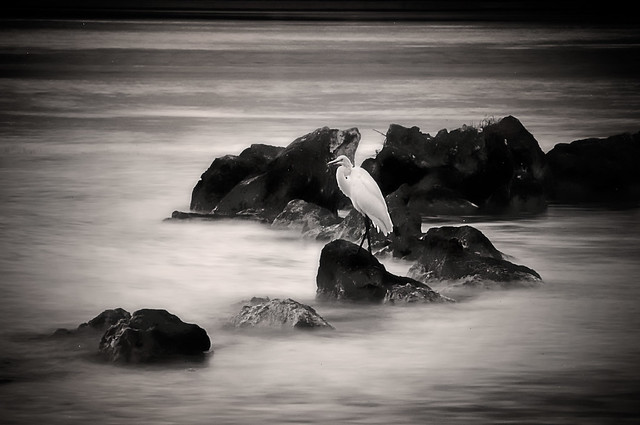
I took another shot at Day of a bird on a rock that was in Bay Lake the Every time the boat would go by it would make a wake so i thought, What would it look like with a long exposure. Now it took about 400 shots before the bird would stand still enough to not be blurry but I was happy with the finished photo.


wdwphotoclub-1.jpg by wdwphotoclub, on Flickr
 
One thing. If you use them when it is already dark or very low light. You have to focus before you put on the filter. You will see nothing through the view finder, maybe a light or two but nothing you or the camera can focus on. (Just a little tip.)
 
Thank you all for your advice. I purchased a cheap fader from China and should be able to expirement in abot 30 days!!! Lol, By the looks of them all, its a 77mm, but steps up to 86 or something, which means I will have to have my hood on before I put it on and probably wont be able to see where its set... I think I may regret this purchase....


Disney Vacation Planning. Free. Done for You.
Our Authorized Disney Vacation Planners are here to provide personalized, expert advice, answer every question, and uncover the best discounts. Let Dreams Unlimited Travel take care of all the details, so you can sit back, relax, and enjoy a stress-free vacation.
Start Your Disney Vacation
Disney EarMarked Producer


DIS Facebook DIS youtube DIS Instagram DIS Pinterest DIS Tiktok DIS Twitter
Add as a preferred source on Google

Back
Top Bottom