In comparing pictures with 4-stop smaller aperture vs a 4-stop ND filter, you are right in that the overall exposure of both pictures will be exactly the same.
However, when you change the aperture, you also change the overall depth of field. When you use the ND filter, you can use a larger aperture to achieve the same exposure.
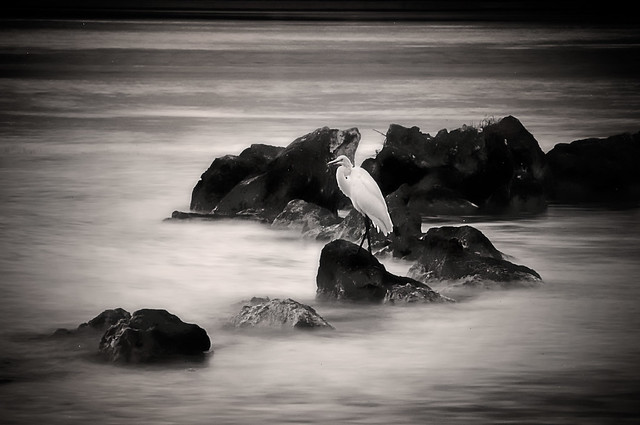
One reason to use an ND filter is during bright daylight. Let's say you're in bright daylight, and you want to take a picture of the fountains in front of the France Pavilion at Epcot. Plus, you want to take the picture so that the fountain shows smooth flowing water (using slow shutter speeds).
In bright sunlight, you can close down the aperture as much as you want (say, f/16 or f/22), but it still may be way too bright to capture the fountain with smooth flowing water. Technically speaking, you'd try to use f/16 or f/22, you set your ISO to 100 (the lowest), and you try a shutter speed of 1 second. That 1-second shutter speed will make your photo WAY overexposed!
To remedy this, you'd use an ND filter on your lens, similar to having your camera wear sunglasses.

This would then allow you to use the slower shutter speeds in bright daylight.
As you've mentioned in another thread, you can use ND filters for fireworks, too. Again, ND filters allow you to keep the shutter open for much longer (ie. use a slower shutter speed) so that you can capture those beautiful *long* fireworks trails.