Are there any rules of thumb as to when or when not to use a polarizer? Since I'm fairly new to the DSLR world I'm still in the experimental phase.
Polarizers filter light to a specific polarity. I imagine that's a particularly unilluminating sentence, so I'll try to be more clear. It would benefit you to read some articles about polarized light to get a better feel for what I'm babbling about.
Polarizers generally do two things for you - darken blue skies and remove glare.
They darken blue skies by removing a lot of the light from the sky that isn't blue. The blue light happens to mostly all be coming with the same polarity. There is a lot of other light coming from the sky that has all kinds of different polarity. When you use your polarizer and twist it right to the right angle, you filter out a lot of the other light but leave almost all of the blue light. The result is that your sky looks bluer.
This trick only works for certain angles. If you are looking directly towards or directly away from the sun, it doesn't work very well and the polarizer has little effect. If you use a really wide angle lens, you can have parts of the sky that the polarizer works well for and parts that it doesn't in the same picture. This can sometimes look goofy because the color and brightness of the sky shifts in the picture for no apparent reason to the viewer.
Reflected light is often polarized. By twisting your polarizer, you can often filter out most or all of the light being reflected from some surfaces. The classic example is light being reflected from lake. With the polarizer off, you see a reflection on the surface of the water. With the polarizer on, there is no reflection and you see what is under the water.
Sometimes, there are lots of small reflections on things that make things look less saturated. Lots of flat or shiny surfaces (leaves are a good example) look better through a polarizer. The best way to learn where it helps and where it doesn't is to use one. Look through your camera and turn the polarizer to see what effect it has.
The downside to polarizers is that, because they filter out some light, they make your image darker. Your camera will compensate for that, but it has to do that by either increasing the ISO, opening the aperture wider, or using a longer shutter speed. It'll do the work for you, so don't worry about it being complicated. It just means that polarizers make it harder to take pictures when there isn't a lot of light.
I only use a U/V filter for lense protection. I haven't noticed any real quality differences so far when I've removed it.
I don't want to get into the whole religious debate on UV filters, but I'll summarize it for anyone unfamiliar. UV filters don't do anything useful for your picture (assuming that you aren't using film). They do provide a layer of glass between the world and your lens. That can protect your lens from scratches or impacts. Except for really crummy ones, they don't usually have much of an affect on your pictures at all. The exception is that they significantly increase the chance that you'll have flare problems or reflections of light sources in your picture. More expensive ones (multi-coated) are designed to minimize (but can't eliminate) this problem. If you're worried about protecting your lens, a lens hood will help more than a UV filter. If you want to be extra safe, there is no reason why you can't use both.


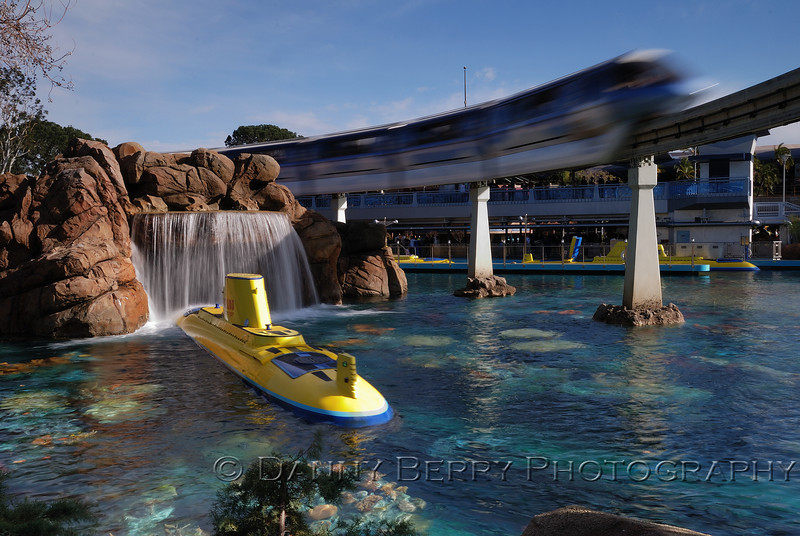


 Sorry to jump on the soapbox in your thread...


 Must be the brand of filter. Cool photo, btw! Love the rides in the background!!