Are you going mirrorless?

Right now I have a point and shoot. I have always wanted a DSLR, but now with these smaller mirrorless cameras that have come out, I am thinking that the NEX5 might be what I want. I just love to take tons of photos while I am in the parks. How does the NEX5 do for nighttime photography?

I have an NEX-3 which has the same sensor as the NEX-5, but the previous generation from the current NEX-5n/NEX-C3.

Low light performance on the NEX-3 is great. Using the kit zoom lens it is a little limited, but we also have the 16mm f2.8 and the 50mm f1.8 which really shine in low light. You can usually take shots in restaurants without flash, etc.

I just switched to an NEX-C3 this week so i don't have a feel for how much better the current sensor is.

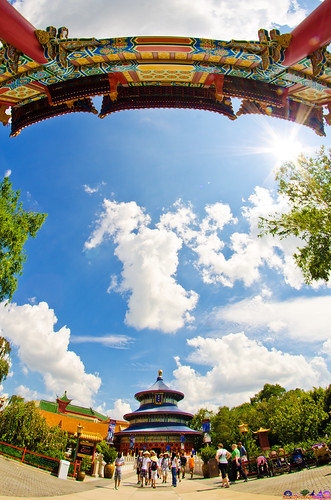
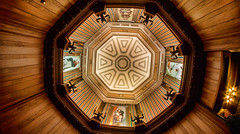
These were taken with the kit zoom, wide open:
DSC00499-vi.jpg


DSC00502-vi.jpg


Here's the 16mm
DSC00584-vi.jpg
 
I have an NEX-3 which has the same sensor as the NEX-5, but the previous generation from the current NEX-5n/NEX-C3.

Low light performance on the NEX-3 is great. Using the kit zoom lens it is a little limited, but we also have the 16mm f2.8 and the 50mm f1.8 which really shine in low light. You can usually take shots in restaurants without flash, etc.

I just switched to an NEX-C3 this week so i don't have a feel for how much better the current sensor is.

These were taken with the kit zoom, wide open:
DSC00499-vi.jpg


DSC00502-vi.jpg


Here's the 16mm
DSC00584-vi.jpg

Wow, those shots are beautiful! Thanks for sharing! I just realized that Nikon makes this type of camera too. Wonder how they are?
 
Nikon makes a mirrorless but they use a P&S size sensor. If your going to go mirrorless I would go M4/3(Panasonic, Olympus) or NEX. I have a NEX 7 and love it. I do shoot with the LA-EA2 adapter and Sigma 17-50 f2.8. My combo isn't really smaller than a DSLR. But I do have the option to throw on a small lens and it's pretty compact.
 
Wow, those shots are beautiful! Thanks for sharing! I just realized that Nikon makes this type of camera too. Wonder how they are?

Both the Nikon 1 V1 and Sony Nex-5n have their benefits.

Basically:
-The Sony has a larger sensor with a better ISO range.
-The Nikon autofocus is faster and can shoot slightly faster continuously.

The Nikon's smaller sensor will probably be a hinderance for low light levels unless you put some really fast lenses in front of it.

If you want to really muddy the waters you can start looking at the Micro 4/3 systems from Panasonic and Olympus.
 

Now I just saw that there is a brand new Nikon D3200 DSLR for about the same price as the NEX3. I guess I really need to go to a Best Buy or something to hold all of these cameras. Maybe then I will know what I want :confused3
 
I jumped from the D7000 to Sony's NEX-7 (and 5N) in February and haven't looked back.

While the E-Mount lenses leave a little to be desired, the LA-EA2 adapter (which allows the use of Sony Alpha lenses + gives you PDAF) transforms the camera into a do-it-all monster that makes my D7000 seem ancient.

I've had some people tell me that using an adapter defeats the purpose, but they couldn't be more wrong. The NEX system, right now, offers you the best of both worlds: if you want to travel lightly, you can put an E-Mount lens on and take excellent photos; however if you feel like transforming into a smaller (but just as good) A77 and bring the real glass out, you put an adapter on and you're good to go. In either setup you're taking photos that are right up there with cameras twice the price.

Some days I'd like to imagine that if the D800 was available to purchase when I switched, I'd put heavy consideration into it. But where I'm at right now with photography, in general, it wouldn't have been a smart buy. Unless you shoot for a living, in a studio where every detail counts, or sporting events, I simply don't see the justification in spending $3000 to have photos show up on Flickr (and around the house) looking marginally better than someone who snapped the same shot, with a P&S, who knows what they're doing.

My two favorite lenses thus far are the Rokinon 8mm F/3.5 Fisheye (E-Mount) and Sony DT 16-50 F/2.8 (Alpha Mount). During the day and shooting action, the SAL1650 on NEX-7 with the LA-EA2 adapter is pure joy. The AF is lightning fast and never has trouble knowing exactly what I want to focus on.

As I've explained (seemingly) across the internet, the NEX allows you to take substantial photos with ease. The LCD (and EVF) shows you exactly what you're getting -- DoF, Exposure, Focus -- and allows you to compose the shot how you want, snap, and move on.

Being relatively new to to photography, the D7000 was also easy to pick up and get running with, but having take a shot or two to calibrate before really getting in to something kept me from fully embracing shooting the shots I wanted. There was always trepidation about going out of my comfort zone with it, because everything seemed like an endeavor.

With the NEX I was seeing the finished product before I even took the shot, and that let me really explore the limits of the camera and my own ability, really, by enabling me to try and capture absolutely everything that came my way.

One of the killer features that I completely overlooked as a gimmick is the flip-out screen. Coupled with the GorillaPod, you can literally take a photo of anything, high or low, and get the shot you want. Having been to WDW in October with the D7000 and then back again in February with the NEX-7, the park felt like an entirely new playground of photo opportunities.

The TL;DR version of all of this is: yes, it's faster and funner to use than a DSLR because you're getting the result you want right out of the gate.

When I first picked up the 5N, LA-EA2, and SAL1650, I wrote a little review here with some photos. It's a good read if you're interested. In episode 9 of ISO5571 I also speak about the camera and my experience with it.

I truly can't see myself going back, the system is that good.

These are some shots I don't think I could've gotten with my D7000, as the combination of a small package and the GorillaPod basically rewrote the rules to what I could capture in the park.

 
Hamilton I feel the exact same way except that my D5100 had a tilt and swivel screen that was awesome. You could shoot from the ground or high in portrait orientation.
 
I jumped from the D7000 to Sony's NEX-7 (and 5N) in February and haven't looked back.

While the E-Mount lenses leave a little to be desired, the LA-EA2 adapter (which allows the use of Sony Alpha lenses + gives you PDAF) transforms the camera into a do-it-all monster that makes my D7000 seem ancient.

I've had some people tell me that using an adapter defeats the purpose, but they couldn't be more wrong. The NEX system, right now, offers you the best of both worlds: if you want to travel lightly, you can put an E-Mount lens on and take excellent photos; however if you feel like transforming into a smaller (but just as good) A77 and bring the real glass out, you put an adapter on and you're good to go. In either setup you're taking photos that are right up there with cameras twice the price.

Some days I'd like to imagine that if the D800 was available to purchase when I switched, I'd put heavy consideration into it. But where I'm at right now with photography, in general, it wouldn't have been a smart buy. Unless you shoot for a living, in a studio where every detail counts, or sporting events, I simply don't see the justification in spending $3000 to have photos show up on Flickr (and around the house) looking marginally better than someone who snapped the same shot, with a P&S, who knows what they're doing.

My two favorite lenses thus far are the Rokinon 8mm F/3.5 Fisheye (E-Mount) and Sony DT 16-50 F/2.8 (Alpha Mount). During the day and shooting action, the SAL1650 on NEX-7 with the LA-EA2 adapter is pure joy. The AF is lightning fast and never has trouble knowing exactly what I want to focus on.

As I've explained (seemingly) across the internet, the NEX allows you to take substantial photos with ease. The LCD (and EVF) shows you exactly what you're getting -- DoF, Exposure, Focus -- and allows you to compose the shot how you want, snap, and move on.

Being relatively new to to photography, the D7000 was also easy to pick up and get running with, but having take a shot or two to calibrate before really getting in to something kept me from fully embracing shooting the shots I wanted. There was always trepidation about going out of my comfort zone with it, because everything seemed like an endeavor.

With the NEX I was seeing the finished product before I even took the shot, and that let me really explore the limits of the camera and my own ability, really, by enabling me to try and capture absolutely everything that came my way.

One of the killer features that I completely overlooked as a gimmick is the flip-out screen. Coupled with the GorillaPod, you can literally take a photo of anything, high or low, and get the shot you want. Having been to WDW in October with the D7000 and then back again in February with the NEX-7, the park felt like an entirely new playground of photo opportunities.

The TL;DR version of all of this is: yes, it's faster and funner to use than a DSLR because you're getting the result you want right out of the gate.

When I first picked up the 5N, LA-EA2, and SAL1650, I wrote a little review here with some photos. It's a good read if you're interested. In episode 9 of ISO5571 I also speak about the camera and my experience with it.

I truly can't see myself going back, the system is that good.

These are some shots I don't think I could've gotten with my D7000, as the combination of a small package and the GorillaPod basically rewrote the rules to what I could capture in the park.


Hamilton's appearance on our podcast (thanks for the shoutout!) had me strongly considering going mirrorless. I ultimately did not, and I think I made the right decision for me personally. Here's why:

1. I don't mind the bulk - A lot of people like to avoid carrying heavy bags or cameras around when traveling. I don't mind it at all. My camera bag normally weighs 25 pounds on an average day in the park, and I'm fine with it. I could see the advantage for a smaller camera at the water parks or somewhere else.

2. Canon and Nikon aren't in the game - At this point, the NEX is the frontrunner, with Canon and Nikon not having yet made serious APS-C entries. This concerned me mostly from the perspective of lenses. I know I could have purchased an adapter to use Nikon lenses, but that meant manual focus, so was out. Sony lenses aren't bad, but I feel that Sony doesn't have the same lineup of first-party lenses that Canon and Nikon have. I'll get into this more in my summary below.

3. With the exception of size, I don't agree that it gives you a new perspective on the parks - I've used my D40, D90, and D7000 to "get low" for years. It doesn't take a GorillaPod and small camera to do this. My tripod can go 4" off the ground. If that's too high, I can use a beanbag or camera strap to prop the camera up from the ground. I can also set the camera right on the ground. The articulating screen definitely makes this easier, but that's not unique to mirrorless.

Examples:


The Sorcerer v. The Apprentice by Tom Bricker (WDWFigment), on Flickr


Cinderella Castle: Through The Eyes Of A Child by Tom Bricker (WDWFigment), on Flickr


Walkin' Right Down The Middle Of Main Street, USA! by Tom Bricker (WDWFigment), on Flickr


What Can I Say--I Liked The Idea. by Tom Bricker (WDWFigment), on Flickr

In sum, I'd rather take a wait and see approach with mirrorless to see what Nikon and Canon do. Hamilton is right that comparable DSLRs are only a marginal improvement over it. However, once you move from P&S to DSLR, I think pretty much everything is only an incremental improvement.

I ended up going with the full frame Nikon D700 instead of the NEX-7. I've since added the Nikon 14-24mm f/2.8 to my bag to pair with it. While I haven't actually used the NEX-7, if it compares similarly to the D7000, I am confident in saying that the NEX-7 paired with ANY Sony lens can't touch the D700 and 14-24mm pairing. I have absolutely no regrets about going full frame instead of mirrorless, and I'm REALLY happy that's the direction I went.

Granted, at $1,400 for the body and around $1,550 for the lens, the cost was significantly more for my setup than the NEX-7. For me, it was worth it, though, but that's a largely personal decision. At this point, my photography purchase decisions are weighted by a cross between value and quality with an emphasis on quality. The NEX-7 offers good value and good quality, but the quality of a full frame body and glass was too strong for me.


That said, this is an area of photography I'll be watching closely and is definitely worth considering if your needs differ from mine. In a couple years, I'll probably give mirrorless another look. By that time, it will undoubtedly have evolved, and it may present me with comparable quality to what I have in my current setup. If that's the case, I'll certainly take the smaller package over the huge DSLR setup.

As touched upon above, it's also a YMMV thing. If you're the type of person who uses a superzoom lens and/or hates heavy gear, I think this is probably right up your alley, right now.
 
3. With the exception of size, I don't agree that it gives you a new perspective on the parks - I've used my D40, D90, and D7000 to "get low" for years. It doesn't take a GorillaPod and small camera to do this. My tripod can go 4" off the ground. If that's too high, I can use a beanbag or camera strap to prop the camera up from the ground. I can also set the camera right on the ground. The articulating screen definitely makes this easier, but that's not unique to mirrorless.

This is really the only point I don't agree with, entirely.

Yes, every camera is capable of capturing the low, high, and everything in between shots. The point I was trying to get across was that, coupled with everything else, these types of photos require no creative thinking and are as natural as shooting shoulder-level, straight ahead.

I've taken low shots with the D7000 numerous times and while it's easy enough, it's not easy. You have to get physical with your surroundings, creative with the architecture, and willing to 'waste' time with setup and breakdown.

With the NEX-7 and the GorillaPod, your setup happens while you're walking to the shot, and your break down is picking it back up. Coupled with the features of the camera (the flip out screen, what-you-get live view) it makes for incredibly fast and rewarding shooting from anywhere, at anytime.

A great example is this guy:


I was able to see what the correct exposure was while the pre show ran, make sure that the GorillaPod was positioned correctly, and then as soon as it was over run, take the shot and be out in time before the cast members even knew what hit them.

It's that type of flexibility that really opens up the park to what you can do where, in some instances, you don't have all of the time in the world to make sure it's perfect. The NEX-7 let's you nail those moments with ease.
 
These are some shots I don't think I could've gotten with my D7000, as the combination of a small package and the GorillaPod basically rewrote the rules to what I could capture in the park.

Nice shots.

I found my last trip to be more enjoyable with a much smaller camera (Lumix G3). The camera does not really limit my ability to be creative and I find the flip-out screen to be very useful when working on a tripod. Fortunately the G3 is light enough to use on a small magnetic Gorilla Pod.

I have many uses for my SLR so I'm not getting rid it. Actually, I'm patiently waiting for a bigger SLR (Nikon D800).
 
Fair points and fair opinion - for sure I don't think anyone needs to justify why they purchased mirrorless or why they didn't, but sharing the reason may help others make their own decisions.

1. I don't mind the bulk

I agree with you on this, though it doesn't necessarily have to be a reason to NOT go mirrorless. I would never consider replacing my DSLR with mirrorless, but you might be a very good candidate to consider adding a mirrorless camera to your collection...since you don't mind the weight, bring BOTH cameras - mirrorless cameras despite not seeming to be all that different from your DSLRs actually do tend to inspire a bit more creativity - I can't even say for sure why - they just do for some folks.

2. Canon and Nikon aren't in the game - At this point, the NEX is the frontrunner, with Canon and Nikon not having yet made serious APS-C entries. This concerned me mostly from the perspective of lenses.

Again fair point - if you're already tied to a system, it makes sense to hope that brand will debut their own competitive mirrorless so you can continue to use the lenses you've already purchased. Whether Canon, Nikon, Sony, or Pentax have 'better' lenses or simply more of them doesn't matter as much as the fact that YOU have a certain brand's lenses and it was a big investment. Though I'd only throw in as a sub-point that manual focus isn't as bad as you might think - it actually can be enormously fun, especially for someone who takes the time to set up shots as you do.

3. With the exception of size, I don't agree that it gives you a new perspective on the parks

Agreed - I think though that Hamilton's point may have not been stated as well as it could have been - it's not that the mirrorless gives everyone new perspective - some very creative types have always been into looking for creative angles and compositions. It's more that the mirrorless systems' convenient size, tilting LCD-based composition, and see-what-you-get live view systems allow MORE people access to their creative juices with far less effort or thought...and for those who already are creative, it can let you do what you do more easily, and possibly even inspire you to try even crazier or more creative ideas - maybe sliding that small lens through a rail and around a corner, with the tilted LCD facing back at you to take a shot at an angle or from a location a DSLR couldn't even go. More creative types like yourself would be the ones to really take advantage of the size and the tiltable screen to get very original stuff.

I ended up going with the full frame Nikon D700 instead of the NEX-7. I've since added the Nikon 14-24mm f/2.8 to my bag to pair with it. While I haven't actually used the NEX-7, if it compares similarly to the D7000, I am confident in saying that the NEX-7 paired with ANY Sony lens can't touch the D700 and 14-24mm pairing.

Indeed, a full frame is going to give you huge control and resolution advantages over APS-C - but what about considering the mirrorless APS-C camera as a 2nd body to your D700, instead of a replacement for it? With an adapter, you could have access to the very same lenses, but this time with a crop perspective and a small body and tilting screen to try new things. Or you could have a lightweight second body with a different focal length lens aboard, and carry it with your D700, for quick shots in a different focal length quickly and easily without a lens change. And even have that possible alternative, in those rare cases where maybe bringing the big DSLR kit along might not be allowed or socially desirable (not that you'd mind, but maybe those you're with don't want your 30lb bag along with you), that you could have a much tinier, more inconspicuous camera to bring that still gives you large-sensor APS-C capabilities, interchangeable lenses, and better controls than a P&S.

Just a few counterpoint ideas to consider!
 
I'm guessing that a lot of those who have moved to mirrorless cameras are those for whom the lighter weight and smaller form factor are a very high priority. Naturally, these cameras deliver in those areas. It's possible a lot of those photographers are willing to overlook some of the things a mirrorless camera doesn't do quite as well as an SLR (I don't know why we need to keep adding the "D" in front of SLR these days) to get this reduced weight and size. After all, most of us make a compromise at some point on the spectrum to gain some benefit. Plenty of us here are passionate about landscape photography, for example, but most of us aren't using medium format despite its inherent advantage in that regard. And most of us are probably shooting a crop-sensor camera despite the advantages a full-frame camera offers because crop sensor bodies and the lenses they can use are less expensive. Mirrorless cameras will undoubtedly continue to make advancements on some of those fronts where they currently fall a bit short -- but then, SLRs will also continue to advance in the meantime as well. It will be interesting to see how things take shape once those for whom light weight and small size are of very high importance have mostly moved to mirrorless.

I can't help but think that another area in which mirrorless cameras (at least, as we think of them today) will have a hard time matching an SLR is that of controls. The more direct control buttons and knobs I have to access the various capabilities of my camera, the better I like it. And a smaller camera body, especially one in which small size is an end unto itself, is going to face an inherent challenge in that regard.

Perhaps one day we'll have something like an SLR with no mirror, retaining the advantages of a larger camera with the reduced mechanical complexity of the current mirrorless cameras. Perhaps when EVFs are perfected, we'll get larger, brighter viewfinders in crop sensor cameras. Time will tell.

SSB
 
Agreed - I think though that Hamilton's point may have not been stated as well as it could have been - it's not that the mirrorless gives everyone new perspective - some very creative types have always been into looking for creative angles and compositions. It's more that the mirrorless systems' convenient size, tilting LCD-based composition, and see-what-you-get live view systems allow MORE people access to their creative juices with far less effort or thought...and for those who already are creative, it can let you do what you do more easily, and possibly even inspire you to try even crazier or more creative ideas - maybe sliding that small lens through a rail and around a corner, with the tilted LCD facing back at you to take a shot at an angle or from a location a DSLR couldn't even go. More creative types like yourself would be the ones to really take advantage of the size and the tiltable screen to get very original stuff.

This.

As I wrote in response earlier, I didn't really get across what I was trying to. It's the combination of the camera's features and size that allow you to really explore the corners of the park that otherwise would be cumbersome.

For example, this shot:


I never would've gone out to try this with a larger camera because it would've required bringing the full tripod into the queue and/or simply taking a high ISO shot. But with the 7 and the GorillaPod, I twisted the legs around the bars and grabbed exactly what I wanted and the proceed to jump on the ride -- no time wasted.

Same goes for the Tower of Terror lobby shots -- I went from standing in line without thinking about taking a photo, to quickly putting the camera on the pod and snapping a perfect shot in one take.

Again, yes, either of those could've been taken with any DSLR, but it's the size and simplicity of the system that allowed me to take the same quality photos without sacrificing any time. You can seriously shove this camera and GorillaPod anywhere to get those long exposure shots that we all love from angles that otherwise seemed off limits.

This shot was taken, literally, on the fencing surrounding the queue:


So what I meant by this camera reinventing the park is that it made me look at every single piece of architecture as a potential mount for a photo, and with the live feedback from the LCD showing exactly what the result would be, it made life a lot easier.
 
The low angle is being concentrated on and I do that FAR more with the articulating screen than I ever did without it and because of the light weight of the mirrorless I can have my gorillapod to handle many tripod situations instead of carrying a full size, bulky tripod which frankly I wouldn't always do. However I will wrap my gorillapod around a bag strap and carry it.

But another point on the perspective discussion is the high angle, over your head shot that I use almost as much - maybe more at Disney. Sure, you can hold any camera over your head, take a shot, review how the framing was and then retake if you want but if it's moving action it's nice to be able to see what you are doing in the screen and not miss the shot. Being of shorter nature I just love that. No, not unique to mirrorless but also a handy feature that isn't on all cameras.

.... it's the size and simplicity of the system that allowed me to take the same quality photos without sacrificing any time. You can seriously shove this camera and GorillaPod anywhere to get those long exposure shots that we all love from angles that otherwise seemed off limits......

......So what I meant by this camera reinventing the park is that it made me look at every single piece of architecture as a potential mount for a photo, and with the live feedback from the LCD showing exactly what the result would be, it made life a lot easier.

Yep - this. Well described. :thumbsup2

Overall for me - with the mirrorless the sensor is the same, it's smaller, lighterweight and has many creative functions. And I can use legacy lenses if I want. Win-Win.
 
I can't help but think that another area in which mirrorless cameras (at least, as we think of them today) will have a hard time matching an SLR is that of controls. The more direct control buttons and knobs I have to access the various capabilities of my camera, the better I like it. And a smaller camera body, especially one in which small size is an end unto itself, is going to face an inherent challenge in that regard.

SSB

You would absolutely love the NEX-7, then ;)

There's a huge gap of quality between the 7 and other mirrorless cameras that Sony hasn't done a really great job of highlighting, as far as controls and settings go.

Between the dozes of custom functions you can set and the different settings the dials adjust depending on the shooting mode, if anything you're left with too much at your finger tips.
 
I'm one of those freaks who has become addicted to using a "real" viewfinder as opposed to an LCD display. Looking through the viewfinder helps me see what the camera sees and not see what the camera doesn't see. I guess it's just a matter of personal preference, but the whole SLR setup really does help me with my composition.
 
Yes, we have an Olympus PEN EPL-1 to compliment our two Olympus dSLRs.

The PEN is a great little camera, and has the same 4:3 sensor as our E30.

With an Olympus adaptor, all of our 4:3 lenses are usable with full auto focus capabilities. Even our Olympus external flashes are fully functional on the PEN.

Additionally, the 14-54 that came with the PEN is retractable, so it fits easily in a pocket for those times we want to travel light, plus the video capability is a nice feature to have.

Familiarity between the systems has helped make using the PEN fairly easy, although it's been "dumbed down" a bit for users not familiar with using manual settings (which is probably a good thing for them, but maybe not so good for the rest of us used to using a dSLR). Some of the manual settings are easier to get to on the dSLR, but that's a trade off I'm ok with.

As with any camera, learning to use it is half the battle in getting good pictures. I, personally, am not looking for perfection in my pictures. I'm looking for good - i.e. ones I'm happy with and good JPEGs straight from the camera (as my days of shooting in RAW casually are probably behind me as I don't enjoy pp much). As well as systems that are small and fairly easy to use. These cameras fit the bill for me.

Realistically, I still prefer using the dSLR, but the PEN is a nice compliment to it.

Olympus has the new OM-D mirrorless as well. http://olympusomd.com/en-US/

P1010071n-1.jpg


Disney Vacation Planning. Free. Done for You.
Our Authorized Disney Vacation Planners are here to provide personalized, expert advice, answer every question, and uncover the best discounts. Let Dreams Unlimited Travel take care of all the details, so you can sit back, relax, and enjoy a stress-free vacation.
Start Your Disney Vacation
Disney EarMarked Producer

New Posts


DIS Facebook DIS youtube DIS Instagram DIS Pinterest DIS Tiktok DIS Twitter
Add as a preferred source on Google

Back
Top Bottom