What's that did you say? Did 'someone' ask how the moon played a role in some of their photos??
Well I can answer that question!

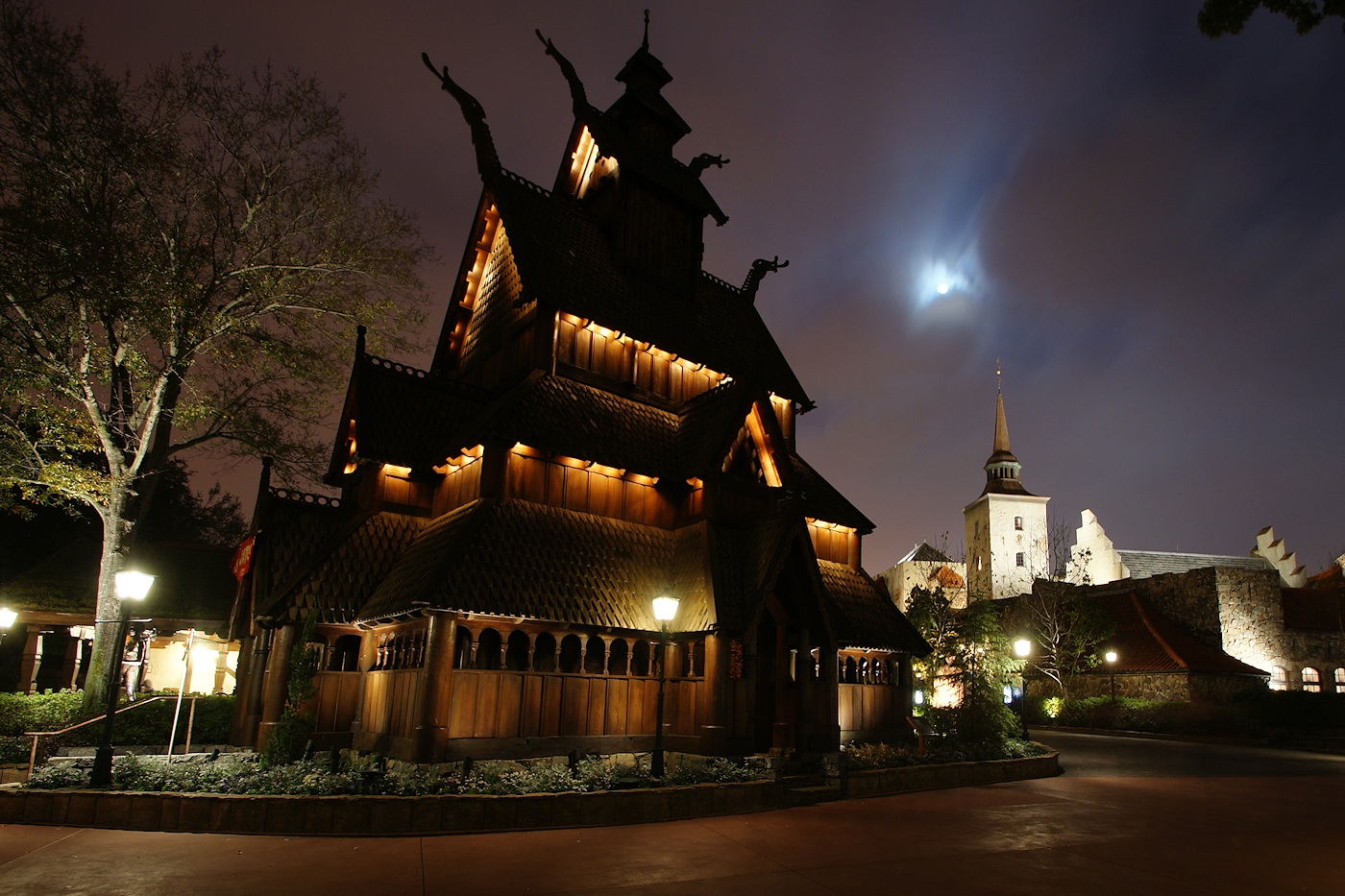
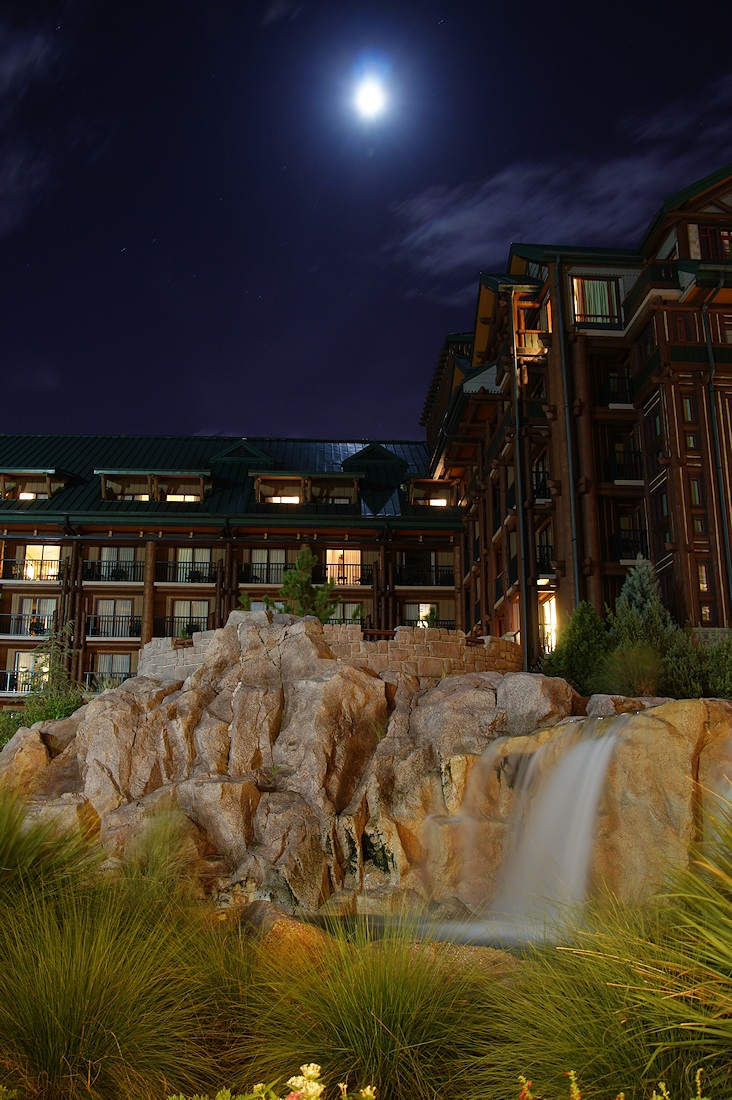
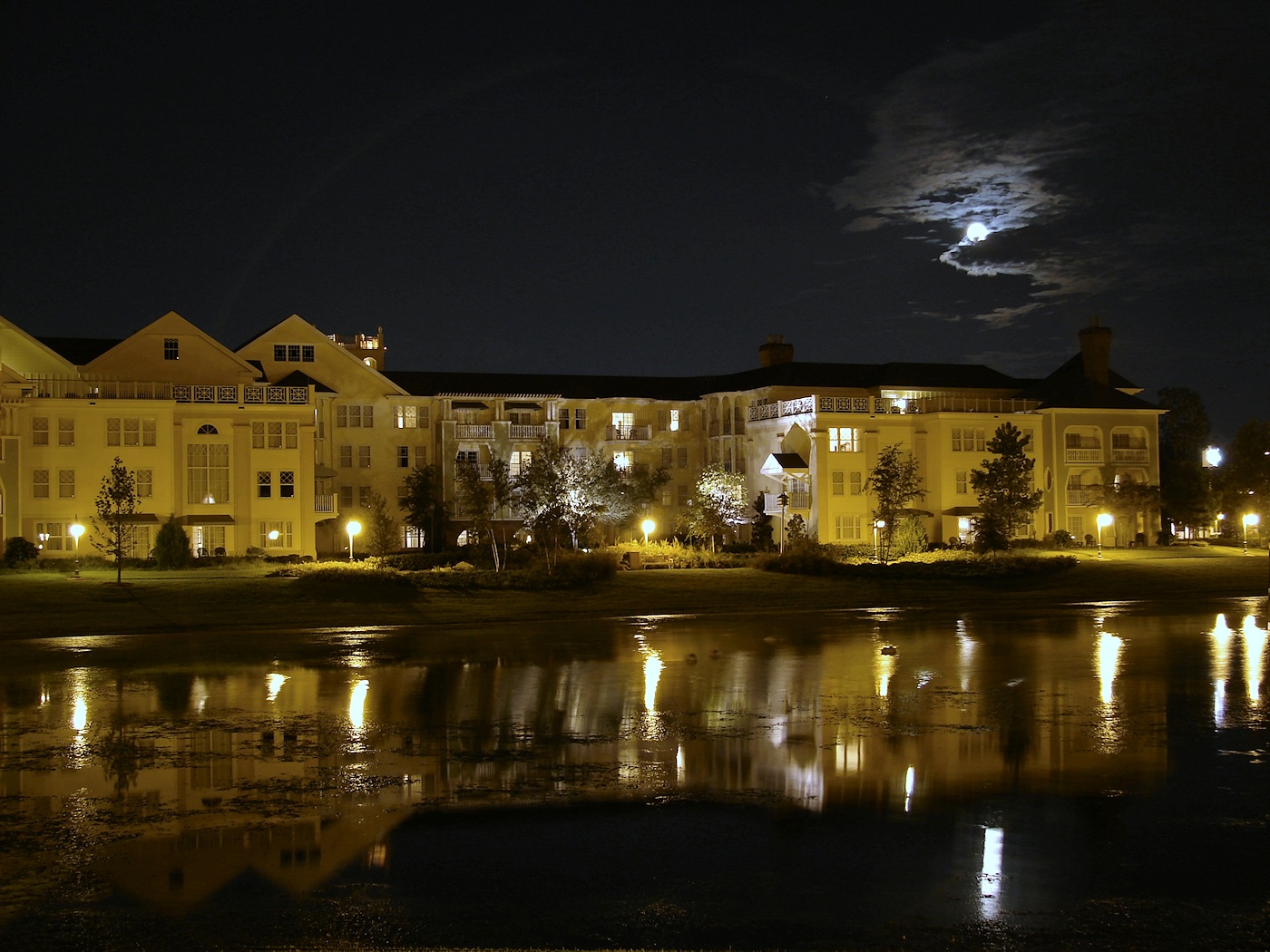
On my last trip to Disney World in June of this year I had the
great fortune to be photographing at night with the full moon rising.... after dark and with virtually clear skies.
There is no way that you can plan for this. Sure you can plan a trip during a certain phase of the moon's rise but it gets tricky when you have to consider
weather and also the
Direction where the moon will rise and also the
TIME of the rising.
I would think that you would have to have access to the parks 24-7-365 to really compensate for all those factors. That's why I say with my "Moon shots" at Disney I was exceptionally lucky.
We'll start with this shot:
 Moon over Tomorrowland
 by
Marlton Mom, on Flickr
What we have here is Tomorrowland, after the parks closed and I was lingering, with no people in the shot and the MOON is low enough and in a good spot to get an angle where I could include it in my shot. Notice I had to move to the side to get the angle. I can move but I can't move the moon.
This shot is really right on the edge of not happening when you consider the clouds moving in, the fact that the parks are closed and it's time to leave. The moon was at a great height, not too low so you wouldn't see it and not way too high that I would have to change the composition of the picture to compensate for the distance above The Tomorrowland facade.
I love the fact that the moon plays a role as a character in this shot. So much of Tomorrowland is about our growing up with Space exploration and the moon launches as a harbinger of the "future". It's only appropriate that the moon is a part of Tomorrowland.
I really wanted to photograph Tomorrowland on this trip. During my last trip I only had one night at MK and my batteries died shortly after I got my TTA shot. I was crushed! There was so much more I wanted to shoot and my camera was dead! In the time period between trips I made a concerted effort to really learn how to shoot using manual controls to try and optimize my exposures. I believe that with today's DSLR cameras, the Auto setting is a disaster and it promises something that it will never be able to deliver if you want your photography to transcend from snap shot to art.
When I was at Disney last, in Dec 2009, I had a huge problem with blowing out the night shots due to the super bright lighting that illuminates the building facades. It wasn't so much a camera problem but more like a comprehension problem on my part. I had to find a way to balance the high lights and low lights on my night shots. This year I came armed with a wider knowledge base, primarily concerning the controls of my camera. Some people like to compensate for these problems using a technique called HDR photography. This entails taking 3 (more or less) exposures and combining the best light ranges of each one into 1 image using software. I'm not there yet but I'd like to be... and one day I will. It occurred to me that I should probably concentrate on getting my original exposures closer to the correct exposures rather than trying to make software compensate for some unimaginable exposure blunder on my part.
The whole time I was shooting the night exposures for this trip I was shooting raw and I was paying special attention to not blowing out the high lights. I found that it was better if I underexposed a picture and the way that I was doing that was to lower the ISO on my Nikon D90 to it's lowest possible setting. I'm not talking about 200 ISO which is the low setting on the D90 but a 3 step exposure compensation to an approximate ISO of 160.
I processed the raw file with a bump up in the fill light and the mandatory color saturation increases (due to shooting in Raw) and I got this:
 Main Street theater
 by
Marlton Mom, on Flickr
No HDR needed but the Moon is over exposed because the moon is deceptively bright. I can live with that because the exposure necessary for the moon and the building facade are too far apart for one shot. Perhaps with HDR I could have gotten the best of both but that's for the future.
As you can see from this picture I had to shoot from one side to avoid the distortion of using a super wide angle lens. I'd like to say that I thought enough ahead of time to put the moon on the correct side of the flag to make it appear that the moon (and not the spot light on the roof out of sight) is illuminating the flag, but that didn't happen. Security was very kindly on my tail and the rule is that once you move forward toward the entrance of the park you can't go back,. (at least that's what I experienced...)
So again, here is my friend for this trip the Moon, nice and low and full and and rising in the right direction. It probably won't surprise you to learn that these shots were taken on the same night approximately 35 minutes apart.
What Luck!
Marlton Mom









 Actually, it probably might be quicker for me to plan another trip out to Yosemite, wait for a blue moon and take the shot myself.


 I love the Melbourne shot too. That was a great catch.





