Monorail - Why no expansion?

Status
Not open for further replies.
Helicopters. We need more helicopters. Just imagine leaving at night..."Get to the chopper!"

Sorry I couldn't resist.

Would be great after firework rush every night.

OK, so the previous comment about the age of the actual monorail sets is not the (only) reason that the system is down for maintenance.

No it is not...

That's not too bad a cost, really.
(Considering the colossal boondoggle of MyMagic+, costing (and cost over-running) between one and two BILLION dollars!)

Many don't know that the Epcot Monorail station was originally designed and blueprinted to eventually have a second beam, to be added in the future.
You can look at the current station and see that it LOOKS like sort of a "half" of a larger structure
(it is asymmetrical) and its "twin" half was to be built to the east of the current platform.

The sidewalk/parking lot area to the east of (and below) the current Epcot station had large support bases that were
poured during the original construction, in anticipation of the future additional monorail operating out of there.
Those supports remained there for years (sort of in the way) until sometime in the last ten years, at which time Disney
(deciding that there would be no more beams or monorails added) had the supports demolished and removed.

Don't forget to factor in the cost to build another monorail shop, and at least one more tractor to be kept out on the expansion line. The current ten train shop has no room to support more trains or be expanded.

You are correct about the Epcot station, the Epcot beam across from the station between pylons 174-176 is a flat bottom beam, and not curved(to work in a station) and the Epcot tower was wired to be a secondary/backup central controller tower. Also around pylon 169 I believe it was set for a switch to be added their. And some of the support bases are still in place.

They COULD spend more and have a series of switches every half mile or so to divert trains around breakdowns or other problems, like they have on heavy rail subways or elevated trains. But a train switching tracks on a monorail isn't necessarily easy or efficient. Another major limitation and drawback of that mode of transportation.

Only issue there is, guests aren't permitted to be in the train while it passes over a switch, because the trains have to bypass there safety systems to cross over. The switching processes you're encountered take some time because trains have to pass through the original express and resort switches at walking speed (2-3mph).
 
I love me some good speculation...

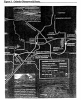
Monorail.png


IMG_0875.PNG
 

Just a few hundred million spread here and there. What about a PeopleMover operating continuously between MCO and WDW? Now that would be a Magical Express!


ANd I would so plan a trip just to take it! People Mover is still my favorite attraction!!!
 
A more practical and maintainable solution is Tearing down the Monorail and building a Light Rail System. You can't do Subway like DC or NYC because of FLA Water table. It is only 10 miles of new Light Rail. I don't think you could build it to all of the resorts due to the Spurs that needed to be created. You would have to still have buses, but it would at least be a Bus free way to park hop.
 
A more practical and maintainable solution is Tearing down the Monorail and building a Light Rail System.
I wonder if there is a per-mile estimate for light rail.
 
On the other hand, you may be undervaluing the entertainment potential.


Hilarious, and EXACTLY how most experienced drivers would react during the first, oh, 10,000 miles of self-driving-car "freedom."

And, in all seriousness, what will be the tales told by "drivers" (should I say "passengers") who invariably DO get involved in a traffic accidents during their trips?

"I just KNEW I should have slammed on the brakes and cranked the wheel when I saw it coming... I just KNEW it!!"
 
Money ..

And yet local city governments ALL over the country want to build (or rebuild) these giant money-wasters.

At least in Disney people ride them heavily and they make profits from the parks to help maintain the system they have.
 
I wonder if there is a per-mile estimate for light rail.

Most recent estimate per mile is about $.50-.60 per mile. About $.10 less per mile than a Bus system, which is the most prevalent form of Mass Transit at WDW property.
 
Most recent estimate per mile is about $.50-.60 per mile. About $.10 less per mile than a Bus system, which is the most prevalent form of Mass Transit at WDW property.

?????????

You mean to OPERATE?

What about the cost to build the tracks and buy the trains?
 
?????????

Reading the wrong Information it seems. It's actually cheaper to run a bus system especially in the long term. Here's a fairly recent piece on Light Rail Maintenance costs for folks to understand the issue better: http://www.realclearpolicy.com/blog/2014/06/06/light_rail_worse_than_buses_966.html

If you want to understand how expensive rail is, Consider that it's a $100 million a mile currently to build a Heavy rail system (aka Walt Disney World Railroad around MK).
 
Most recent estimate per mile is about $.50-.60 per mile. About $.10 less per mile than a Bus system, which is the most prevalent form of Mass Transit at WDW property.
Wow - that sounds incredibly low.
 
I wonder if there is a per-mile estimate for light rail.
There are but the costs vary widely based on whether it is a surface system or if it includes subway tunnels, and since most projects have included at least some subway portions it's tricky. Suffice it to say that in a situation like WDW--where surface right-of-way costs would be small or non-existent--a surface-only light rail system would be less expensive to build than a monorail. It still would cost a lot and provide less flexibility than the bus system.
 
Light Rail is anywhere from $15 million to $100 million a mile. It varies pretty considerably.
Interesting. So at the low end its clearly cheaper than the monorail. But at the upper end the monorail could be a winner.

The monorail does have one advantage in environs like WDW, low impact. That is, you only need to plant the pylons in the ground, not lay a complete rail bed. On typical FL swampy ground this could be a significant factor.
 
Interesting. So at the low end its clearly cheaper than the monorail. But at the upper end the monorail could be a winner.

The monorail does have one advantage in environs like WDW, low impact. That is, you only need to plant the pylons in the ground, not lay a complete rail bed. On typical FL swampy ground this could be a significant factor.
Seattle was by far the most expensive recent project, with an average cost of $179M/mile, because of tunneling and soil conditions. I have a suspicion that given the swamp nature of Disney land, Disney would be on the high side for construction costs. Salt Lake City, which is obviously nice and dry, cost about $20M/mile.

Boston's Big Dig cost $200M per lane mile.

Disney presumably has reasonable capital efficiency for operating costs, based on rider numbers.
 
So there is a rail expansion proposed in the Philadelphia suburbs currently. The projected initial cost is 1.2B for 4 miles. That's 300 million per mile. I'm sure some is for land purchase, but that's an incredible sum per mile. This is for an elevated rail line.
 
Status
Not open for further replies.


Disney Vacation Planning. Free. Done for You.
Our Authorized Disney Vacation Planners are here to provide personalized, expert advice, answer every question, and uncover the best discounts. Let Dreams Unlimited Travel take care of all the details, so you can sit back, relax, and enjoy a stress-free vacation.
Start Your Disney Vacation
Disney EarMarked Producer


DIS Facebook DIS youtube DIS Instagram DIS Pinterest DIS Tiktok DIS Twitter

Add as a preferred source on Google

Back
Top Bottom