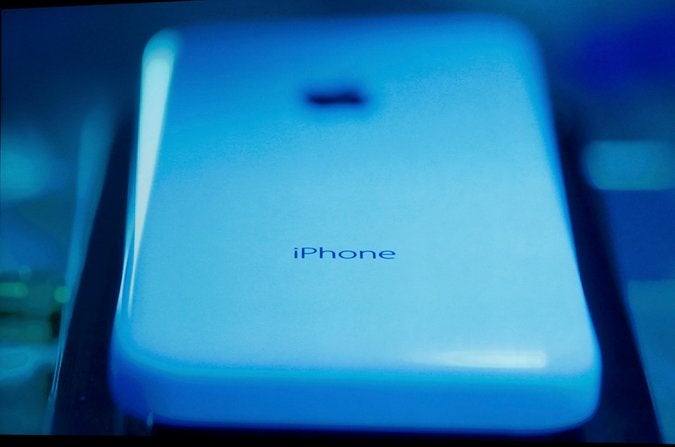
February 17th, 2016 Judge to Apple: Unlock San Bernardino shooter's iPhone

What I heard on the radio this morning is that Apple did not make code to be able to unlock the phone. They feel that if there is code to do so that it will open the door for others to get into any phone and use the info for good are bad purposes.

i think they kinda did. they were able to remove the 10 passcode, erase the device. So basically, the FEDs can keep guessing his passcode until they get in. All the articles ive read seem to indicate forcing apple to unlock this specific iPhone, but Apple's message seems to say that the courts want Apple to build a backdoor for all iPhones in the next iOS.

Kudos to Apple for stepping up consumers right to privacy with our phones.
 
What I heard on the radio this morning is that Apple did not make code to be able to unlock the phone. They feel that if there is code to do so that it will open the door for others to get into any phone and use the info for good are bad purposes.
And if you believe that, I've got a bridge to sell you. Of course Apple has the tools to get in the phone.
 
And if you believe that, I've got a bridge to sell you. Of course Apple has the tools to get in the phone.

I am not an IT person and really do not know anything about the technical end of stuff. I leave all the IT stuff to my husband who is in the the IT field. I am sure this will be a discussion for us tonight because I always tell him what I hear and he tells me if it is true when it comes to stuff like this. I was just stating what I heard.
 
Boards Responsive Body
It is very VERY hard for me to believe that Apple devised a system to encrypt a phone, that works with other similarly encrypted phones, but they have no ability to un-encrypt it.
No way....

Seriously...

NO WAY

I can just see it -
Terrorist A: "I just sent you some messeges and info via encrypted iPhone...
Terrorist B: "Sorry, but I have no way to UN-encrypt the info so I can use it...

Ummmm..... Okaaaaaaaay.....

Encrypted info is useless until un-encrypted.
And, the FEDS are not asking for a transcript from one criminal's phone.
It is obvious that they are asking for far more than that.
They are not hoping for a case-by-case, by warrant, basis.
They want far more than that.
 
Last edited:
It is very VERY hard for me to believe that Apple devised a system to encrypt a phone, that works with other similarly encrypted phones, but they have no ability to un-encrypt it.
No way....

Seriously...

NO WAY

I can just see it -
Terrorist A: "I just sent you some messeges and info via encrypted iPhone...
Terrorist B: "Sorry, but I have no way to UN-encrypt the info so I can use it...

Ummmm..... Okaaaaaaaay.....

Encrypted info is useless until un-encrypted.
And, the FEDS are not asking for a transcript from one criminal's phone.
It is obvious that they are asking for far more than that.
They are not hoping for a case-by-case, by warrant, basis.
They want far more than that.

The process of sending a message from one phone to another has no bearing on the matter.
Information held on the phone is encrypted so that only the owner can access it.
The encryption is password protected.
There is currently no software that allows the encryption to be by-passed
If someone makes too many attempts to guess the password then the phone automatically erases all information.
In the first instance the authorities want Apple to disable that destruction process to give them more time to guess the password.
In addition, the authorities want Apple to build a "back door" into their software to facilitate access at any time on any Apple product.
Once that genie is out of the bottle there is no way to put it back in again.
If access is now known to be possible then others will find it through endeavour or extortion or bribery.
Rather than just the authorities having access to just one Apple product, all Apple products would be vulnerable and transparent.
Once Apple falls the other operating systems will follow.

ford family
 
If there is a way to remotely unlock a phone, somebody will figure out how to do it who shouldn't be able to. It's the same argument about "backdoors" in encryption algorithms. Data is encrypted to keep it safe. Allowing governments to unencrypt this data easily will make the data unsafe.

https://www.washingtonpost.com/news...to-encryption-isnt-just-happening-in-the-u-s/

Lol, data is inherently unsafe once its released. there is always a "bad" guy trying to get to it. from the local trying to steal cc information to governments spying on each other.
 
The process of sending a message from one phone to another has no bearing on the matter.
Information held on the phone is encrypted so that only the owner can access it.
The encryption is password protected.
There is currently no software that allows the encryption to be by-passed
If someone makes too many attempts to guess the password then the phone automatically erases all information.
In the first instance the authorities want Apple to disable that destruction process to give them more time to guess the password.
In addition, the authorities want Apple to build a "back door" into their software to facilitate access at any time on any Apple product.
Once that genie is out of the bottle there is no way to put it back in again.
If access is now known to be possible then others will find it through endeavour or extortion or bribery.
Rather than just the authorities having access to just one Apple product, all Apple products would be vulnerable and transparent.
Once Apple falls the other operating systems will follow.

ford family

I'm going to show my stupidity here so sorry in advance. I'm trying to understand it, but I am truly technically challenged. I'm assuming there is a difference between what you are talking about and normal text/call? We are able to see all the texts politicians send to their interns and mistresses, but that's not what we are talking about in this case, is it? There is an encryption going on and that is what they are trying to access? So why do phones even have this ability to encrypt content? Do everyday people regularly encrypt messages? Again, sorry for the stupid questions.
 
they were able to remove the 10 passcode, erase the device.

I've seen articles saying that this is one of the things they're being asked to do, but I haven't seen anything saying that they've done it.

Even if they had this, I don't see how they could use it, because they still need a way to get this updated software onto the phone, and I don't know if that can be done without first unlocking the phone or deleting the data.

All the articles ive read seem to indicate forcing apple to unlock this specific iPhone, but Apple's message seems to say that the courts want Apple to build a backdoor for all iPhones in the next iOS.

I've seen the request as having two parts:

  1. Create a version of iOS that won't erase the phone after ten failed attempts at unlocking it. The intent is not for Apple to release this to the general public, but to release this to the FBI so that the FBI can use brute force to unlock the phone. Apple doesn't want to do this, because they're afraid it will get into the wrong hands.
  2. Create a hardware hook to allow the FBI to programmatically try all possible combinations to unlock the phone (instead of making someone tap in ten thousand unlock codes by hand).

Of course Apple has the tools to get in the phone.
Why would they? There's zero motivation for them to have this and lots of motivation for them to not have this.

It is very VERY hard for me to believe that Apple devised a system to encrypt a phone, that works with other similarly encrypted phones, but they have no ability to un-encrypt it.
...
I can just see it -
Terrorist A: "I just sent you some messeges and info via encrypted iPhone...
Terrorist B: "Sorry, but I have no way to UN-encrypt the info so I can use it..
That's not how it works.

The data on the phone is encrypted. The owner decrypts it (indirectly from their unlock code), then (assuming something like iMessage) it gets encrypted differently using public key encryption, which allows the recipient to decrypt it, after which it's encrypted again for storage on the recipient's phone. But the reason public key encryption works is because of some clever cryptography that allows trading secret keys. Knowing how it works doesn't help you crack it. It's like saying that anybody at the hardware store can create a key to your house since they have one of those fancy key grinders and blank keys -- no, they also need to know how your particular key is shaped.
 
I have a difficult time with this one. I can understand the point that somebody used about "everybody's privacy is in danger by opening this floodgate". I feel as if they really need access to this kind of info for the "greater good" (for lack of a better term).

This makes me sad because it is kind of like the terrorists have one. We give up a bit of our freedom and privacy for safety.There are no easy answers here.
 
Boards Body 300
In case anyone wants more of an explanation:

From the NY Times:

Explaining Apple’s Fight With the F.B.I.
18explainer-master675.jpg

The iPhone comes with a standard feature that automatically wipes the phone clean of all its data after 10 incorrect password attempts have been entered. Stephen Lam/Reuters

Tuesday evening, a federal court ordered Apple to help the F.B.I. unlock an iPhone used by one of the attackers who killed 14 people in San Bernardino, Calif., in December.

Wednesday morning, Apple said in a strongly worded letter that it would challenge the court’s request. While technology companies recently have resisted government demands, Apple’s letter is one of the industry’s most forceful pushbacks against a court ruling.

In the hours after Apple’s letter was published, technologists and legal experts have been dissecting what, exactly, the Cupertino, Calif., company can’t — or won’t — do to help the government.

What is the government asking for?

The Federal Bureau of Investigation wants to examine the iPhone used by Syed Farook to determine whether he and his wife, Tashfeen Malik, had planned the shooting directly with the Islamic State. The iPhone, a 5c version of the smartphone that was released in 2013, is locked by a passcode, which the F.B.I. wants Apple to circumvent.Apple would have to build a new version of its iOS smartphone software that allows the F.B.I. to bypass certain restrictions. Apple claims this software can give someone “the potential to unlock any iPhone in someone’s physical possession.”

So what does the court order require Apple to do?

The court is ordering the company to “bypass or disable” a feature that automatically wipes an iPhone clean of all its data after 10 incorrect password attempts have been entered. This is a standard feature on iPhones.

Technically, that would not require Apple to decrypt the passcode that blocks access by outsiders to the iPhone. It would allow the government to try an unlimited number of passwords without fear of the phone erasing all of its stored information.

In electronic security parlance, that is what is called a “brute force” attack, and all it takes is time and patience to submit a large number of passcodes. Brute force attacks are usually carried out with the assistance of a powerful computer, which can automatically input millions of different password combinations until it guesses the correct one.

Can Apple comply with the order if it wants to?

Apple’s opposition is mostly ideological.

“The same engineers who built strong encryption into the iPhone to protect our users would, ironically, be ordered to weaken those protections and make our users less safe,” Timothy D. Cook, Apple’s chief executive, wrote in the letter.

Apple argues that the software the F.B.I. wants it to create does not exist. But technologists say the company can do it.

Why can’t the F.B.I. build this software?

The iPhone is designed to run only iOS software created by Apple. For the phone to recognize that the software was made by Apple, the company must sign each piece with an encrypted key to verify it. Even if the F.B.I. tried to build a new version of iOS, it would not have Apple’s crucial signature.

The agency argues that this is a one-time request and wants Apple to create software only to get into Mr. Farook’s phone, not unlimited access to iPhones everywhere.

Are there other ways for the F.B.I. to get this information?

There is a lot of data available that does not require Apple’s assistance in unlocking the phone. The F.B.I. could ask Verizon, the cellular carrier by which Mr. Farook’s phone was serviced, to give the agency more information on the phone.

The government could also request information from the application developers who created the apps for Mr. Farook’s iPhone.

But those are avenues the F.B.I. has probably already pursued, explaining why it wants Apple to unlock the device. Some data is not accessible without Apple’s intervention.

Are there other legal implications for the tech industry?

What Apple is most worried about is the precedent that compliance can set for future requests from the government. There are few earlier rulings courts can use for guidance, and Apple does not want to pave the road for similar requests to itself and other tech companies.

Other countries, like China, could also make similar demands.

“The key question here is how far can the government go in forcing a third party to aid in surveillance?” said Christopher Soghoian, principal technologist for the American Civil Liberties Union.

Apple will most likely file an appeal with the court in the coming days.

http://www.nytimes.com/2016/02/18/t...=Full&region=Marginalia&src=me&pgtype=article
 
More on why it's so complicated

Apple Fights Order to Unlock San Bernadino Gunman's iPhone

http://www.nytimes.com/2016/02/18/technology/apple-timothy-cook-fbi-san-bernardino.html

Some excerpts

“This Apple case really goes right to the heart of the encryption issue,” said Ira Rubinstein, a senior fellow at the New York University Information Law Institute, “and in some ways, this was a fight that was inevitable.”

This is not the first time a technology company has been ordered to effectively decrypt its own product. But industry experts say it is the most significant because of Apple’s global profile, the invasive steps it says are being demanded and the brutality of the San Bernardino attacks.

Law enforcement officials who support the F.B.I.’s position said that the impasse with Apple provided an ideal test case to move from an abstract debate over the balance between national security and privacy to a concrete one.

There is no debate that, when armed with a court order, the government can get text messages and other data stored in plain text. Far less certain was whether the government could use a court order to force a company to write software or redesign its system to decode encrypted data. A federal law would make that authority clear, they said.

The legal issues raised by the judge’s order are complicated. They involve statutory interpretation, rather than constitutional rights, and they could end up before the Supreme Court.

As Apple noted, the F.B.I., instead of asking Congress to pass legislation resolving the encryption fight, has proposed what appears to be a novel reading of the All Writs Act of 1789.

The law lets judges “issue all writs necessary or appropriate in aid of their respective jurisdictions and agreeable to the usages and principles of law.”

The government says the law gives broad latitude to judges to require “third parties” to execute court orders. It has cited a 1977 ruling requiring phone companies to help set up a pen register, a device that records all numbers called from a particular phone line.

Apple argues that the scope of the act has strict limits. In 2005, a federal magistrate judge rejected the argument that the law could be used to compel a telecommunications provider to allow real-time tracking of a cellphone without a search warrant.
 
Last edited:
Lol, data is inherently unsafe once its released. there is always a "bad" guy trying to get to it. from the local trying to steal cc information to governments spying on each other.

Which is why it should be encrypted using an algorithm that can't be broken without a lot of time and effort.
 
Which is why it should be encrypted using an algorithm that can't be broken without a lot of time and effort.
true but the presumption that if they somehow do this it will open the "flood" gates is false. Apple itself has been fighting with china over attempts to break into their OS so there already are entities out their trying to break into it.
Unfortunately it does come with the territory.
As the articles above have said, apples opposition is mostly ideological. The feds could go to Verizon and have them to get the data. I just reject apples stance that doing this would all of a sudden make everyone's Iphone vulnerable.
 
The problem is the encrypted part, correct? There is already software out there that allows someone to look at everything that you have done on your phone. It doesn't matter if you erased, deleted, instagram, whatever, it can be found.

I don't see what the big deal is because all the person has to do is have access to your phone. Now, for getting through the encryption, that is another story but I don't see how the NSA or FBI or CIA doesn't have a computer program to get past that.
 
Listening to some of the conversation on this, conversation everywhere not simply the discussion right here, makes me laugh a little and feel like some people are approaching this topic like the lady in the commercial with her wall of photos, unfriending everyone. That's not how this works, that's not how any of this works.
 

Loading WDWINFO articles...

Dreams Unlimited Travel
Before You Book Disney, Get a Free Quote
Our Authorized Disney Vacation Planners help you compare resorts, tickets, packages, discounts, dining, and cruise options. There is no cost to use our planning services.
Request a Free Vacation Quote
Walt Disney World · Disney Cruise Line · Disneyland · Adventures by Disney
-


DIS Facebook DIS youtube DIS Instagram DIS Pinterest DIS Tiktok DIS Twitter

Add as a preferred source on Google

Back
Top Bottom