rossb
Mouseketeer
- Joined
- Feb 24, 2008
- Messages
- 271
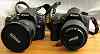
My experience with the D7000 thus far has been much more in line with Gdad's (and almost every single review out there thus far) than it has with rossb's. I've noticed gains in high ISO performance and dynamic range. That, plus the litany of added features and controls made it a no-brainer for me.
I've shot them side by side, tripod mounted, with the same lens and I've yet to see a significant difference which favors the D7k. I've tried low light, bright light, with flash, and without flash. I could take two pics, strip the EXIF, size them the same, post them, and I doubt that most people could consistently pick the D7k over the D90. I've yet to see an online review that performed a side by side test like that with the same lens at the same time. Please post a link if you have one.
That being said, I think that the D7k body is better. It has a better feature set. I've taken over 3000 exposures with mine. One thing I noticed at Disney was that the D7k meter was much more likely to indicate LO when shooting at night. I don't remember seeing my D90 go to LO so quickly. It literally dropped from 1/15 @ ISO 1250 to LO and when I took the shot the camera picked 1/10 (with the meter blinking LO) and the exposure was good. I found this to be annoying when I was shooting handhelds at night. Ken Rockwell said the following about the D7k meter:
The one thing that is broken with the new 2,016-segment meter, is that it no longer can read down to less than moonlight, as just about every other NIkon since the FE has been able to do.
The D7000's meter is more than good enough to shoot in any sort of light in which you can read or see things, but if you like to shoot out in the dark outside at night, the D7000 hits ISO 6,400, and then stops at 1/6 of a second.
This is good enough for shooting under full moonlight, but not in darkness that's darker than this. For shooting in darker darkness, we'll have to dial-in compensation, or, duh, go to manual exposure as I often do anyway.
The D7000 more than meets its specifications to meter down to LV 0; the catch is that we've all gotten used to Nikon's cameras metering down perfectly in darkness many stops darker than specified.




 Hats off to Sony. (Of course, Nikon won't admit that it's a Sony sensor but I don't think there's much question that it is...)