Tell me about Teleconverters

mom2rtk

Invented the term "Characterpalooza"
Joined
Aug 23, 2008
Messages
62,817
I have heard others talk about using extenders on their lenses for more reach. I know you lose a stop or 2 of light, but that's about all I know.

My best quality zoom is my Sigma 50-150 f/2.8. I'm wondering if I should pick up something to add to its reach. I'm thinking mostly about animal shots at AK.

Can anyone tell me what to look for when buying one?

Thanks as always for the help!
 
An extension tube is actually used for close-up/macro photography. It is a teleconverter you want. I know Canon makes some (I believe you shoot with Canon IIRC), what's your budget?
 
Since I don't shoot Canon, I don't know specifically which TCs will work with your Sigma lens, but some brands to look into are Kenko, Sigma and Canon TCs.

You'll also need to decide how much more reach you want---that will determine if you buy something like a 1.4 or 2.0 converter.

Additionally, you need to take into account that with some TCs and certain lens/camera combos, you may end up losing some of the lens functionality and oftentimes, the IQ is a bit degraded, although a lot of that is determined by what brand you buy, what lens you are starting with, etc.

I'm not a TC or Canon expert, so my advice is limited to the general stuff above, but all in all I have found that in AK, most of the shots I wanted to get I was able to with around 180mm or less, so for me personally (unless you really need extra reach for more than just Disney) I would rather spend whatever money I had to spare elsewhere on something more useful in my kit.

Here are some examples, all taken 180mm or less. I have a lot more at home (including some of the lion on the rocks on KS) and none of them were in the 200+ range.

1186464341_Zfrkw-L.jpg


1186464585_KtY2A-L.jpg


1186464282_t2q4R-L.jpg


785651850_MSXzF-L.jpg


A family of elephants on the African plains. by annnewjerz, on Flickr
 
Thanks Anne! And :welcome: back to the board!

Told you I didn't know much..........:lmao: Yes, a teleconverter would be what I am asking about. Thanks for reading my mind!

Yes, I do have a Canon (T2i). I don't really have a budget in mind. I'd just sort of like to know more about what's available so I can see if it's something I want to consider. I don't mind giving up some light, but if I give up too much IQ, then I might as well use my Tamron 18-270. I was just sort of hoping to leave that one at home on our next Disney trip.

I also shoot my son at XC and track and sometimes it would be nice to be able to extend the reach a little there on the sunny days.

I guess the bottom line is that if it's too much, I'd be better off saving for a longer lens. To be honest, I really don't want to carry a bigger lens around and thought this might be an alternative.

Gorgeous shots! I'm anxious to get back to AK and give it a try myself. We got one day there last December and it rained most of the day. So we did do the Safari once, but not either of the trails.
 

They're not necessarily expensive, but TCs tend to be a 'you get what you pay for' proposition - because you are sticking extra glass between your lens and sensor, you naturally have something that can possibly degrade the image quality and the light to the sensor. The quality of the converter just like the quality of the glass in the lens will make a very big difference in how much, if any, image quality loss you will suffer. And how good a lens you are starting with too - if it's an excellent, fast lens, it can stand to lose 4% quality and 1 stop of light, and still deliver an excellent image - if it's an OK lens, it might lose just enough image quality or become just a little too slow, and push it over the limit.

Where I see teleconverters used the most, and in fact where I use one myself, is with wildlife, bird, and sports shooting, usually paired with a very high end fast prime lens. The ability to push a 300mm lens to 420mm with a 1.4x converter, having an F4 become an F5.6, and still attaining quality far above that of a decent zoom, is a nice alternative to buying a similar spec 400mm prime which would be much more expensive and heavier to boot. Same goes for pushing a 500mm lens to 700mm, or a 600mm lens to 840mm. You'll note I am using the 1.4x TC in the above examples - most photogs who use TCs agree that the 1.4x converters have the least harmful effects on picture quality, and lose less light, than the 2x or greater converters.

I bought a nice 300mm F4 prime for my DSLR, and wanted to get a little more reach, as an alternative to using my 200-500mm zoom, when birding - 300mm left me a little short sometimes, but I also didn't necessarily need 500mm all the time, so if the converter was of good enough quality and could get me 420mm, it would be perfect. In my case, I considered Tamron, Sigma, Sony, and Kenko converters, but was fortunate to find a used Minolta APO matched TC for my lens. Matched converters are always the best - they were designed by the same folks who designed the lens, and were specifically optically designed and tested WITH that lens for optimal performance...plus, they look like they're a part of the lens when attached - you can't even tell there's a TC on the camera unless you look closely. For me, it was worth the extra money to get a high grade 1.4x TC - the only other one I was considering was the Kenko, as they seem to universally get praised as the best of the third-party teleconverters, at least with their higher end pro models.

As for Animal Kingdom use - well I'm a bird and wildlife photographer, so for me, there's never enough telephoto, and I've regularly shot throughout the parks at 250, 300, and 420mm. You certainly have plenty of closeup opportunities where you can get shots with much less, but other times having the big lens lets you get really tight portraits of some of the littler animals, or extreme closeup facial details on some of the bigger guys. Not to mention the shallow DOF control which can take the animals out of their caged environs for a natural wildlife look. And in the aviaries on both jungle trails, 300mm is a bare minimum for some of those sneaky little birds popping around the branches! If you're into this type of photography, or want to be, then I think you might be happy with a TC as long as your zoom lens you're using it on is a solid performer. It's an F2.8, so you should be fast enough to still get decent performance and no issues with autofocus (sometimes a slower lens won't be able to autofocus with a TC because it pushes it beyond the requirement for the AF sensors). I think there's much to love about having 300mm+ at AK -

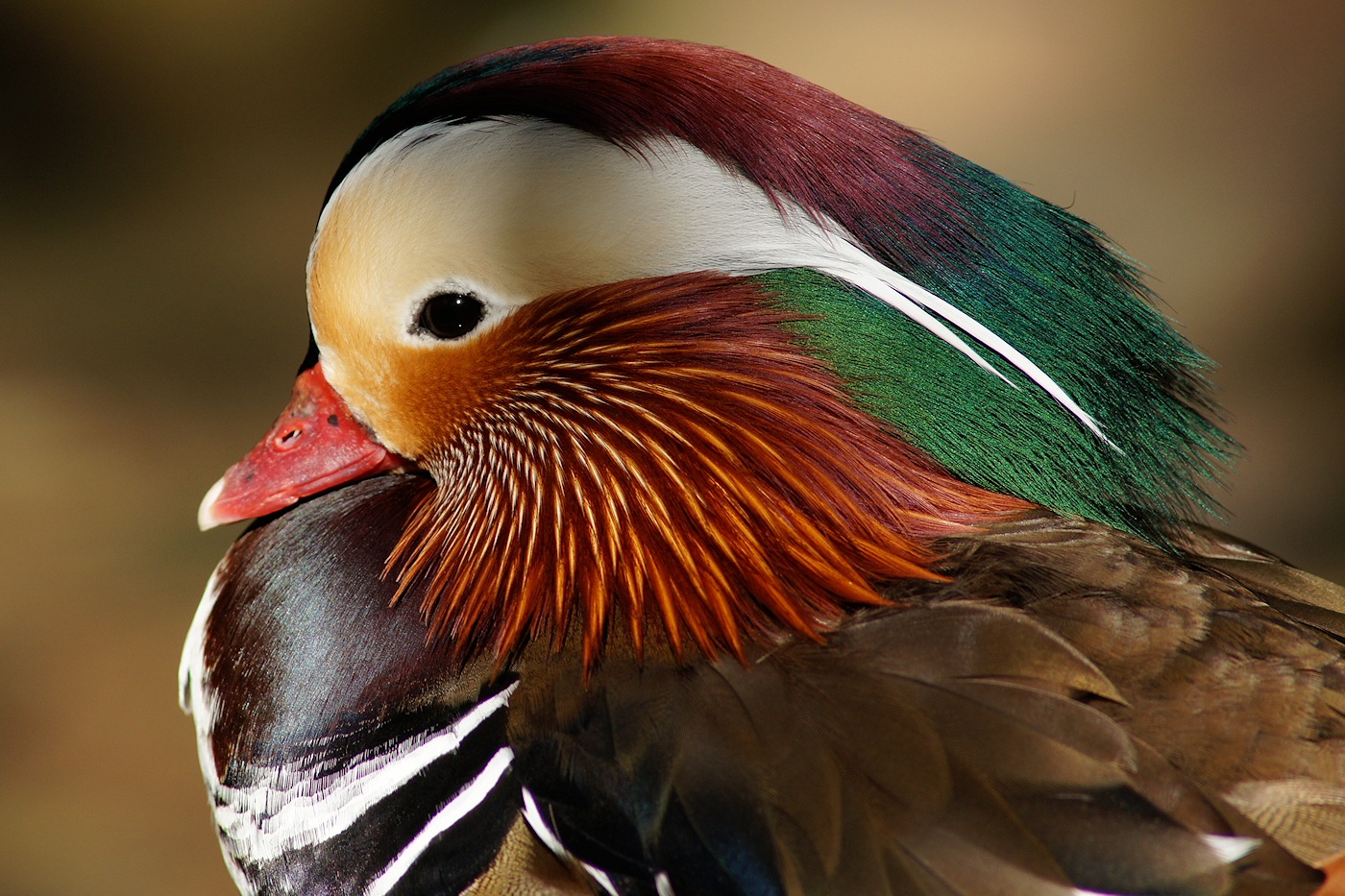
For those nice close detail shots with nice soft backgrounds:
original.jpg


original.jpg


For those waaaay closer than you expected shots:
original.jpg


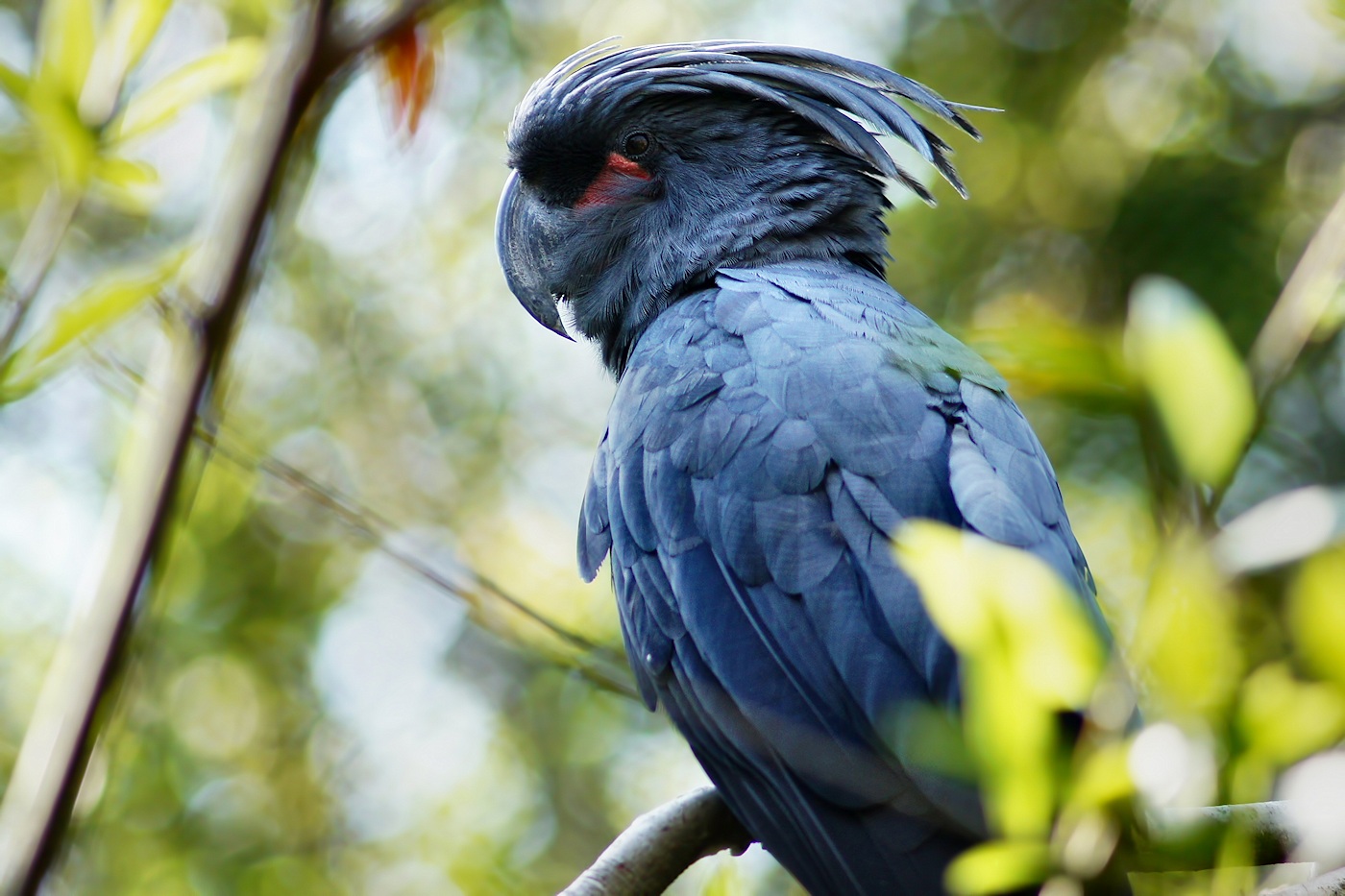
Closeups of the smaller birds that hide in the aviaries:
original.jpg


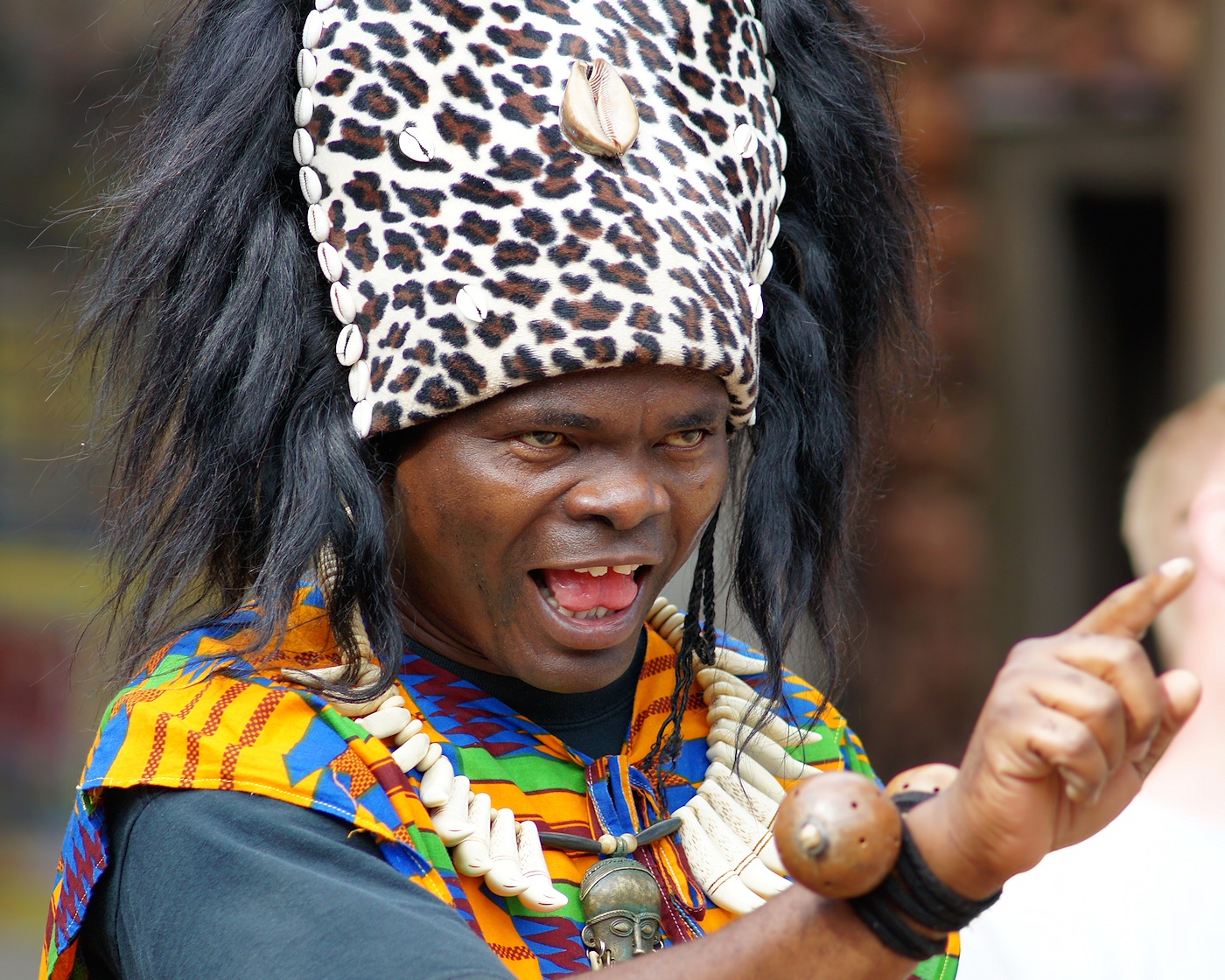
Even portraits of performers and people:
original.jpg


Stage show closeups and details:
original.jpg
 
You'll note I am using the 1.4x TC in the above examples - most photogs who use TCs agree that the 1.4x converters have the least harmful effects on picture quality, and lose less light, than the 2x or greater converters.

IIRC, something you didn't mention, is that the Canon TCs don't work with Canon EF-S lenses ... something about the depth of the mount....

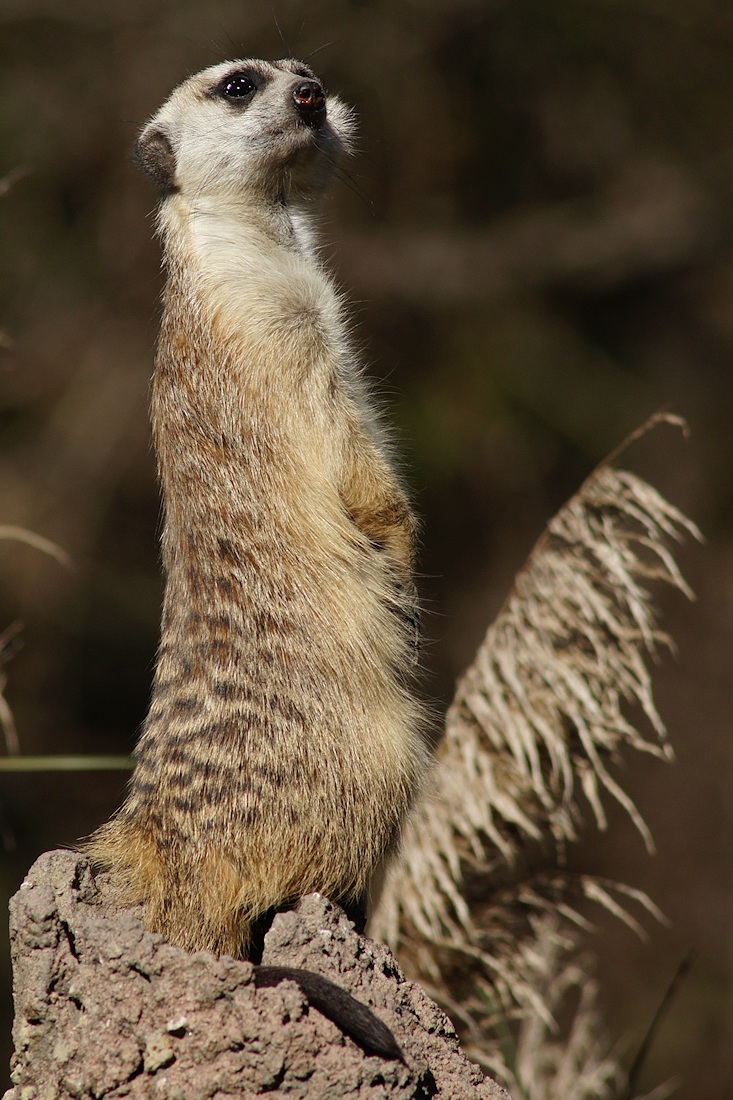
One OT aside ... in your picture of the meerkat, one unfortunate stem of grass kind of makes it look like he's standing at a urinal! :lmao: It's still a really nice, sharp pic, though. :thumbsup2
 
IIRC, something you didn't mention, is that the Canon TCs don't work with Canon EF-S lenses ... something about the depth of the mount....

Good information for the OP - honestly, I don't know much about Canon's own TCs and which lenses they're compatible with.

One OT aside ... in your picture of the meerkat, one unfortunate stem of grass kind of makes it look like he's standing at a urinal! :lmao: It's still a really nice, sharp pic, though. :thumbsup2

:)

Thanks...That's actually one of the things I like about it...not too many people pick up on it, but it's something I noticed and chuckled at - and decided to keep that one. I took another while the background was blowing around a bit where a larger branch moved into the frame and took away the urinal effect:

original.jpg


But being one of darker humor, I actually like the urinal one better.
 
IIRC, something you didn't mention, is that the Canon TCs don't work with Canon EF-S lenses ... something about the depth of the mount....

Canon gets more specific than that. The current Canon teleconverters are only compatible with L series tele-zooms and L series primes over 135mm. So those of us poor folks who don't have L are SOL when it comes to Canon teleconverters. This isn't to say you can't make it work, but it's not intended to work.
 
Not sure why you would want to get a converter if you already have an 18-270 if your plan was to use it on a 150.... you wouldn't be increasing your reach by much.

If it were me I would just take the 18-270... not to mention it gives you a wider angle than the other lens which will be more useful than you think at AK.
 
Not sure why you would want to get a converter if you already have an 18-270 if your plan was to use it on a 150.... you wouldn't be increasing your reach by much.

If it were me I would just take the 18-270... not to mention it gives you a wider angle than the other lens which will be more useful than you think at AK.

One reason many people opt to get a teleconverer for a shorter lens even though they have a longer lens in the bag is because it's just that much better optically or it's a good bit faster. Or both.
 
Justin, thank you so much for the rundown on teleconverters! And the shots are stunning as always.......... grass special effects and all! :lmao:


Canon gets more specific than that. The current Canon teleconverters are only compatible with L series tele-zooms and L series primes over 135mm. So those of us poor folks who don't have L are SOL when it comes to Canon teleconverters. This isn't to say you can't make it work, but it's not intended to work.

Well, I guess that leaves me out. No L glass here.


Not sure why you would want to get a converter if you already have an 18-270 if your plan was to use it on a 150.... you wouldn't be increasing your reach by much.

If it were me I would just take the 18-270... not to mention it gives you a wider angle than the other lens which will be more useful than you think at AK.

I like my 50-150 2.8 lens. I struggled with what to get when I decided to add a 2.8 zoom. I really do like that the 50 end is wide enough to make it more usable without swapping lenses back and forth. I like that it's a smaller lighter package than the 70-200 2.8 zooms. So it comes along in my backpack most days to the parks. It's my lens of choice for shooting XC and track meets. That said, there of course are some times I'd like a little more reach. I thought it might be preferable to carry along a TC as opposed to bringing yet another lens. And I figured with my 50-150 already at 2.8, it might be faster with the TC than the Tamron is without one.
 
One reason many people opt to get a teleconverer for a shorter lens even though they have a longer lens in the bag is because it's just that much better optically or it's a good bit faster. Or both.

Add to that the fact that it's less bulk in my bag (less than bringing both lenses) and you've got it covered!

I do like the Tamron. But I just love the flexibility of the 2.8's.
 
I don't think that any piece of photographic equipment disappoints people as much as teleconverters. They are useful, but very limited.

The first problem is that a teleconverter will degrade the optics. Lens are complicated compromises. When you put on a teleconverter, it throws off the compromises. Some people look at it as magnifying the imperfections of the lens, but it is really more complicated than that. A teleconverter might work relatively well on one model of lens and not so well on another. As a general rule, they work much better with primes than zooms.

Next, you lose one stop of light with a 1.4x and two stops with a 2.0x teleconverter. There is no way around that. The problem is that the size of your aperture (the actual opening in the lens) doesn't change, but you're focal length increases. If you have a 100mm lens f/4 lens, it has an aperture that is 25mm in area (100/4). If you put a 2x teleconverter on it, the focal length is now 200mm but the aperture is still only 25mm. The combination is now f/8.

This loss of light hurts you in more ways than just having to increase your shutter speed. Your viewfinder will also be less bright. Your autofocus will have less light to work with, so it won't work as well. With Canon teleconverters, I think the AF system quits working once the aperture exceeds f/5.6 on a consumer camera and f/8 on a pro camera. You can trick it by putting tape across one of the contacts so that it won't shut off AF, but your AF won't work very well unless you have a lot of light and contrast. If you buy a third party teleconverter (like the Sigma), you don't have to do the tape trick.

No matter how you slice it, your AF will be slower. I think the camera purposes slows AF with a teleconverter.

The teleconverter has an element that sticks out in the front. The lens you use it on must have an open space for it to fit into. For Canon lenses, that includes most of the primes from 135mm up. It also includes the various 70-200mm lenses and the 100-400. I think that the tilt/shift lenses and the MP-E65 Macro also work. Remember than on f/4 lenses, you can't AF without a pro body when using the 2x and on f/5.6 lenses, you can't AF with any teleconverter without a pro body.


Teleconverters can be useful for macro work because they don't change the minimum focus distance so you can enlarge your subject by roughly 1.4x or 2.0x.

In my experience, the 1.4x works fairly well. On my 70-200 f/2.8, it is decent at f/8 and useable at f/5.6. Any wider than that and I find it objectionable. I don't like the 2x on the 70-200 at all. On my 300 f/2.8, the 1.4x looks good even down at f/4. The 2x is passable at f/5.6 but looks much better at f/8.

In your situation, I don't recommend that you get a teleconverter. I don't think you'll be happy with the overall performance with it on your Sigma. Even though I say that the 1.4x works OK on my 70-200, in practice I never bother. The performance gain over just cropping and enlarging isn't enough to justify the drawbacks.
 
Thanks Mark. I appreciate the honest rundown. You guys are very helpful as always. The issue with auto-focus is probably my jumping off point. I had visions of boosting my reach a bit for my son's running. But not at the expense of efficient focusing capability.

I still struggle with wanting more reach and loving the sharp 2.8 lenses but not wanting to lug them around all the time. Oh the choices in life!
 
My experience is similar to Mark's although I only have Canon's 1.4x and only use it with a 70-200 f/4 L lens. It works well and still focuses quickly, at least in good light which is the only time I use the combination. I did a test and could see no image degradation although there must be some. I also tested just cropping and enlarging the image and that was not quite as good as using the teleconverter but not far off either.

For the $$$ it probably is not worth it.
 
My experience is similar to Mark's although I only have Canon's 1.4x and only use it with a 70-200 f/4 L lens. It works well and still focuses quickly, at least in good light which is the only time I use the combination. I did a test and could see no image degradation although there must be some. I also tested just cropping and enlarging the image and that was not quite as good as using the teleconverter but not far off either.

For the $$$ it probably is not worth it.

Thanks Bob! I appreciate the honest feedback. The info on cropping vs. using the TC is really helpful.
 
While I agree with Mark and Bob, Nikon takes an interesting approach to teleconverters that I think makes sense. They make theirs so the only fit a very few long and high quality lenses. This to me acknowledges the fact that you are degrading the lens and the image in using them.

I just got the 1.7 for my 70-200 and used it several times on my recent cruise. I actually made a 15 picture panorama of Castaway Cay with it using it on my 70-200. Bright sunny day so light was not the issue. I would love to print it or share it but it is a 1.2gb file!!!! I was pleased with image I got, but once again I was in Caribbean sunlight.

I think they have their place but not in the way most want to use it.
 
While I agree with Mark and Bob, Nikon takes an interesting approach to teleconverters that I think makes sense. They make theirs so the only fit a very few long and high quality lenses. This to me acknowledges the fact that you are degrading the lens and the image in using them.
.

actually Canon does that too. Canon teleconverters, aka "extenders' only fit and work with a select list of lens, which are long and higher quality !
 
So too does Sony/Minolta. It's part of what I mentioned before, using a 'matched' teleconverter which I do with my 300mm F4 - the TC is designed to pair with Minolta's APO lenses only, and is basically 100% match for the quality of the lens - no loss of IQ at all.


Disney Vacation Planning. Free. Done for You.
Our Authorized Disney Vacation Planners are here to provide personalized, expert advice, answer every question, and uncover the best discounts. Let Dreams Unlimited Travel take care of all the details, so you can sit back, relax, and enjoy a stress-free vacation.
Start Your Disney Vacation
Disney EarMarked Producer

New Posts


DIS Facebook DIS youtube DIS Instagram DIS Pinterest DIS Tiktok DIS Twitter
Add as a preferred source on Google

Back
Top Bottom