Looking to purchase a new camera and asking the experts!

I've gotten far better low light performance from the RX100 than my Sony Alpha dSLR. It's an older SLR, so the ISO is a bit limited. But at the same ISO, the RX100 is outperforming my DSLR, unless I switch to my 1.8 lens. Using the basic kit lens, my RX100 is getting better low light performance than my dSLR.

Low light performance is dictated by ISO (where the RX100 matches most DSLRs and can outperform older DSLRs as in my case), aperture (where the RX100 outperforms most kit lenses), and sensor size (where all dSLRs outperform the RX100).
This is your experience. It doesn't make it generally true, or true of everybody and everything.
 
Back to the OP.

Are there any sites or books out there that are good for helping with settings for low light pictures? I am very new to this.
From Imaging Professional Roger N. Clark, Ph.D..

Image quality is subjective and the bottom line is lighting, composition and subject are more important than the inherent image quality that a camera delivers.

Night and Low Light Photography with Digital Cameras: http://www.clarkvision.com/articles/night.and.low.light.photography/

How a prime lens can improve your photography (prime lens = fixed lens, no zoom): http://www.picturecorrect.com/tips/how-a-prime-lens-can-improve-your-photography/
 
-- RAW mode -- Better photographers prefer to shoot in RAW mode, which saves more data, and then requires adjustments in post processing. Most P&S cameras do not record RAW mode. The RX100 does record RAW mode, BUT a lot of software is awaiting updates to be able to use the RX100 RAW data.
I also just wanted to comment on this for the benefit of people reading.

You do NOT have to shoot RAW to be a better photographer. I mention this because I know a lot of people are intimidated by the mention of RAW. You certainly can if you WANT to, but it isn't necessary. And sure, some advanced photographers do use RAW. But many advanced photographers don't, or save using it for special photographs that they want more options to post process.

I just don't want that to scare people away from buying anything above a point and shoot. Rest assured, if you never care to use RAW, you don't ever have to.

Want to get better photographs? Again, with ANY camera - focus on basics, like lighting, composition, holding still, filling the frame, keeping landscapes straight, finding interesting subjects, using color, lighting, and even shadowing to your advantage, etc. You don't necessarily have to get the latest and greatest of any camera to get great photographs. (And conversely, you won't necessarily get great photos with the latest and greatest.)

Beginners, try this book. It'll be the best $10 you spend if you want better pictures using any camera: http://www.amazon.com/KODAK-Most-Basic-Digital-Photography/dp/1579907628
 
This is your experience. It doesn't make it generally true, or true of everybody and everything.

Never said otherwise. Said it was true of MY DSLR with its kit lens, versus the RX100, when taking identical shots. Now, take a newer DSLR with a prime lens, I'm sure the results would be flipped.

There is absolutely no question that a DSLR, with the ability to change lens, and with its bigger sensor, gives you more potential. But for each out of the box, an RX100 versus a DSLR with a standard kit lens, the RX100 has some advantages and performs better under some circumstances. A 1.8 aperture is going to perform better in low light than a 3.5 aperture. The larger sensor size of a dslr by itself is not usually going to make up for huge difference in aperture.

snapsort.com/compare/Sony-Cybershot-DSC-RX100-vs-Sony_Alpha_DSLR-A560 -- Found that the RX100 had better light sensitivity than the Sony Alpha DSLR.

I assure you, if I handed you my SLR with its kit lens, and handed you the RX100, you'd get better low light pictures with the RX100. On the other hand, switch out the kit lens for a prime lens, and go to manual settings, and the DSLR will outperform the RX100. Switch the RX100 to handheld twilight mode, which stacks multiple images, a feature not found on my DSLR, and the RX100 may again outperform my DSLR.

I'm talking about my experiences, comparing MY dSLR with the RX100. I've done side by side comparisons. I don't think you've actually done side by side comparisons.
I'm not talking about every dSLR, and I'm certainly not talking about every dSLR lens. I've been pretty clear on the many advantages of a dSLR.
 

Never said otherwise. Said it was true of MY DSLR with its kit lens, versus the RX100, when taking identical shots. Now, take a newer DSLR with a prime lens, I'm sure the results would be flipped.

There is absolutely no question that a DSLR, with the ability to change lens, and with its bigger sensor, gives you more potential. But for each out of the box, an RX100 versus a DSLR with a standard kit lens, the RX100 has some advantages and performs better under some circumstances. A 1.8 aperture is going to perform better in low light than a 3.5 aperture. The larger sensor size of a dslr by itself is not usually going to make up for huge difference in aperture.

snapsort.com/compare/Sony-Cybershot-DSC-RX100-vs-Sony_Alpha_DSLR-A560 -- Found that the RX100 had better light sensitivity than the Sony Alpha DSLR.

I assure you, if I handed you my SLR with its kit lens, and handed you the RX100, you'd get better low light pictures with the RX100. On the other hand, switch out the kit lens for a prime lens, and go to manual settings, and the DSLR will outperform the RX100. Switch the RX100 to handheld twilight mode, which stacks multiple images, a feature not found on my DSLR, and the RX100 may again outperform my DSLR.

I'm talking about my experiences, comparing MY dSLR with the RX100. I've done side by side comparisons. I don't think you've actually done side by side comparisons.
I'm not talking about every dSLR, and I'm certainly not talking about every dSLR lens. I've been pretty clear on the many advantages of a dSLR.
Havoc, we are just going around and around and around with this.

Here is my point, in a nutshell: very little of that matters. There is more to getting good pictures than the technical aspects of a camera.
 
Thanks for the recommendations!

I am now looking at maybe getting a DSLR kit with a Canon T2i or T3i or getting the Sony RX100. Trying to decide if it wouldn't be easier to just get the RX100 or learn to use a DSLR. Is there a big difference in photo quality between these?

Also my husband read tht the T3i may not be the bet for action shots? Does anyone know which would be best for night shots & other low light shots?

I'm also looking into some waterproof cameras. There are just too many options. Decisions, decisions.

I haven't looked at what others have said, so I may be repeating things. It's an old thread so I'm probably repeating myself.

Using a point and shoot and using a DSLR... both can be used on auto. And to get the most out of both you need to learn a bit about photography. There is no difference in how an exposure is made between the two.

A big difference in photo quality... Well, personally I've pulled great shots out of cheap point and shoots and shot a lot of crap with my DSLR. A big part of getting a good quality image is on the photographer, not the camera. I really think we spend far too much time wrapped up in what specs do what with cameras these days. Some features make it easer to get certain types of shots but that does not equal better image quality.

I've looked at a lot of the shots coming out of the RX100. And I've seen a whole lot of out of focus images. I see the same kind of out of focus shots coming out of DSLRs. Because it doesn't matter which camera you get if you don't learn how to use it you won't have great image quality.

The T3i can rock for action shots. You just have to know how to use it and which lens to get. A lot of people get hung up on the burst rate, citing a higher frames per second by this camera or that, and a fast burst rate isn't the end all be all of getting great action shots. Knowing your equipment and anticipating the shot go a lot farther to getting what you want. and that holds true for any camera.

At the end of it all the camera is just a tool. It's the photographer that matters. Find a camera with the features you want (research and make a list), at a price you can afford and that feels good in your hands. Learn to really use it and you will get good shots.
 
Zackiedawg - Thanks for all the information & sample pictures. Do you use the lens that comes in the kit? Also were these all done without flash? I usually do not use flash because I don't know how to use it properly.

I think we are going to do some shopping soon & get a feel for the different cameras.

Havoc315 - Thanks again! I will definitely check out the comparison website. There are a lot of things to consider. The ability to be able to get great shots out of the box is certainly appealing. But I know that is up to me regardless which camera I use!

Pea-n-Me - Thanks so much for the in depth response. Certainly a lot to think about. I think my husband & I need to check some of these cameras out in person to get a feel for them. So far we have looked at the Sony-Nex 5n. I'm not opposed to interchangeable lenses it's just the cost factor that scares me! It would certainly offer a variety of options. My husband & I are both looking into making this camera an investment & one to have for a long time. I would definitely fall in that middle category you described! I think that is why I'm having such a hard time deciding. Thank you for the links as well! I am definitely going to check them out.

Photo_chick - Thanks so much for the response! I am definitely looking to improve my skills in order to get the most out of whatever camera we end up with. I may read a few of these books before I make a decision just to have a better idea of what I'm looking for. I think we are going to hit some stores & get a better feel for some of these cameras just to see how they feel in hand.

Thanks again everyone!
 
My top concern with getting the DSLR kit is buying it & then having to invest in higher quality lenses. I just don't know if I know enough to want to make that kind of investment.

I'm not opposed to interchangeable lenses it's just the cost factor that scares me! It would certainly offer a variety of options.

I'll just point out what was mentioned in regards to this. There are lots of DSLR owners that never use more than the kit lenses. What the interchangeable system allows is for you to use others if you wish to. If you get the RX100 that isn't an option - the lens it comes with is the only one you'll ever be able to use. And that's not saying it's bad but I think you are focusing too much on an option vs. a requirement of buying more lenses.

Now, if it's a control for avoiding the temptation of buying more that's something different! :lmao:
 
Zackiedawg - Thanks for all the information & sample pictures. Do you use the lens that comes in the kit? Also were these all done without flash? I usually do not use flash because I don't know how to use it properly.

For the Disney shots at least, it was mostly with the kit lens...the 18-55mm. Most of the bird and wildlife shots were with the Sony SEL55-210mm lens, where I needed more zoom. In the whole gallery, there are a few other lenses sprinkled in here or there, but probably 90% of them were with the kit lens if scenics or standard shots, or the 55-210mm lens for birds and wildlife.

I do not use the flash on the NEX at all. I actually do know how to use flash - I have a much more advanced flash system on my DSLR when I do need flash, but I'm not a big fan of the weak little built in flashes in general, and moreover I actually tend to prefer the look of naturally occurring light and low light - I find shooting high ISO and big apertures brings in a more interesting light and shadow cast that adds depth and interest for me, whereas flashes create 'perfectly' illuminated shots when used correctly, but just don't hold my interest as much.

I use the EVF attachment on my NEX-5N, and leave it on most of the time, as it is my preferred shooting stance to have a camera up to my face - I'll take it off when I want to make the camera as compact as possible.

I think we are going to do some shopping soon & get a feel for the different cameras.

Excellent idea. That's the most important thing - you need to like the way the camera feels in your hand, and handles for you. Remember one thing on the NEX cameras and on the RX - both of them do allow a fair bit of customizing of the controls so they work better for you. The NEX interface can seem the most foreign and strange, and some folks just don't like the menus at all (I'm one of them, actually!), but the amount of customization you can do with the buttons on the camera allow you to control up to 9 key functions via direct button control so you rarely even need the menu. So don't judge the controls right off the bat from first hold...and the RX also allows programmable buttons and even has a memory setting to store favorite settings as your own custom 'scene' mode...just keep that in mind with both cameras when you're handling them - that they will work and function better once you've set up your favorite controls and functions.
 
For the Disney shots at least, it was mostly with the kit lens...the 18-55mm. Most of the bird and wildlife shots were with the Sony SEL55-210mm lens, where I needed more zoom. In the whole gallery, there are a few other lenses sprinkled in here or there, but probably 90% of them were with the kit lens if scenics or standard shots, or the 55-210mm lens for birds and wildlife.

I do not use the flash on the NEX at all. I actually do know how to use flash - I have a much more advanced flash system on my DSLR when I do need flash, but I'm not a big fan of the weak little built in flashes in general, and moreover I actually tend to prefer the look of naturally occurring light and low light - I find shooting high ISO and big apertures brings in a more interesting light and shadow cast that adds depth and interest for me, whereas flashes create 'perfectly' illuminated shots when used correctly, but just don't hold my interest as much.

I use the EVF attachment on my NEX-5N, and leave it on most of the time, as it is my preferred shooting stance to have a camera up to my face - I'll take it off when I want to make the camera as compact as possible.

Thanks. I would definitely not be investing in a different lens yet but those shots look great. I'm glad to know they were taken without flash too. We will definitely look into the NEX-5n when we go looking at the store. Thanks for all the info.


Excellent idea. That's the most important thing - you need to like the way the camera feels in your hand, and handles for you. Remember one thing on the NEX cameras and on the RX - both of them do allow a fair bit of customizing of the controls so they work better for you. The NEX interface can seem the most foreign and strange, and some folks just don't like the menus at all (I'm one of them, actually!), but the amount of customization you can do with the buttons on the camera allow you to control up to 9 key functions via direct button control so you rarely even need the menu. So don't judge the controls right off the bat from first hold...and the RX also allows programmable buttons and even has a memory setting to store favorite settings as your own custom 'scene' mode...just keep that in mind with both cameras when you're handling them - that they will work and function better once you've set up your favorite controls and functions.

I'm excited to go test some of these cameras out. The customization features sound really great. Hopefully I will be able to figure it out!

I'll just point out what was mentioned in regards to this. There are lots of DSLR owners that never use more than the kit lenses. What the interchangeable system allows is for you to use others if you wish to. If you get the RX100 that isn't an option - the lens it comes with is the only one you'll ever be able to use. And that's not saying it's bad but I think you are focusing too much on an option vs. a requirement of buying more lenses.

Now, if it's a control for avoiding the temptation of buying more that's something different! :lmao:

Thanks for the response! I guess I was afraid that the kit lens wasn't a great lens but it sounds like the lens is just fine. It would be nice to have the option to upgrade in the future as well.

The temptation would be great I think!

Havoc- thank you for the shot comparison. Those pictures look really great to me. If I could get pics like that I would be one happy girl!
 
Thanks for the response! I guess I was afraid that the kit lens wasn't a great lens but it sounds like the lens is just fine. It would be nice to have the option to upgrade in the future as well.

Just one other piece of advice I'd add if you do go with the NEX...the kit lens should be of a fine quality, capable of delivering very good image quality across the range. However, every once in a while some folks report getting a bad one, and usually it's pretty clear - it's badly out of focus or blurry on one side in almost all shots. It doesn't happen often, but many of the comments you see on camera boards for the NEX where someone is reporting how they hate the kit lens, often it is due to the fact that they got a bad one. It's not uncommon nowadays with any camera brand to occasionally get a glitchy or bad one - do not hesitate to return or exchange the lens if you do get a bad one. The same goes for any camera you get - if yours isn't performing the way everyone else describes, and you run it through some tests as others instruct, you may find you got one with a problem and simply exchange it. I've heard of at least one RX100 being faulty (badly overexposing all the time), I've had a Canon S100 with issues in the family, and have seen NEX, Olympus OMD, Nikon D5100s, etc get returned due to an odd random problem. Product control isn't quite what it used to be! But exchange it and chances are you'll get one of the good ones.
 
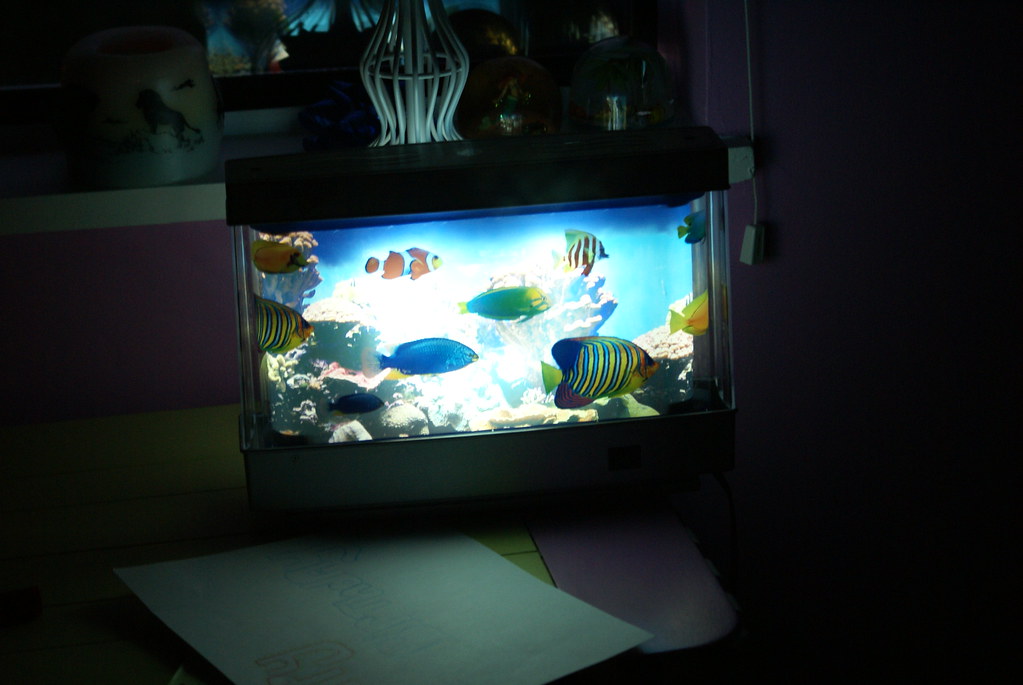
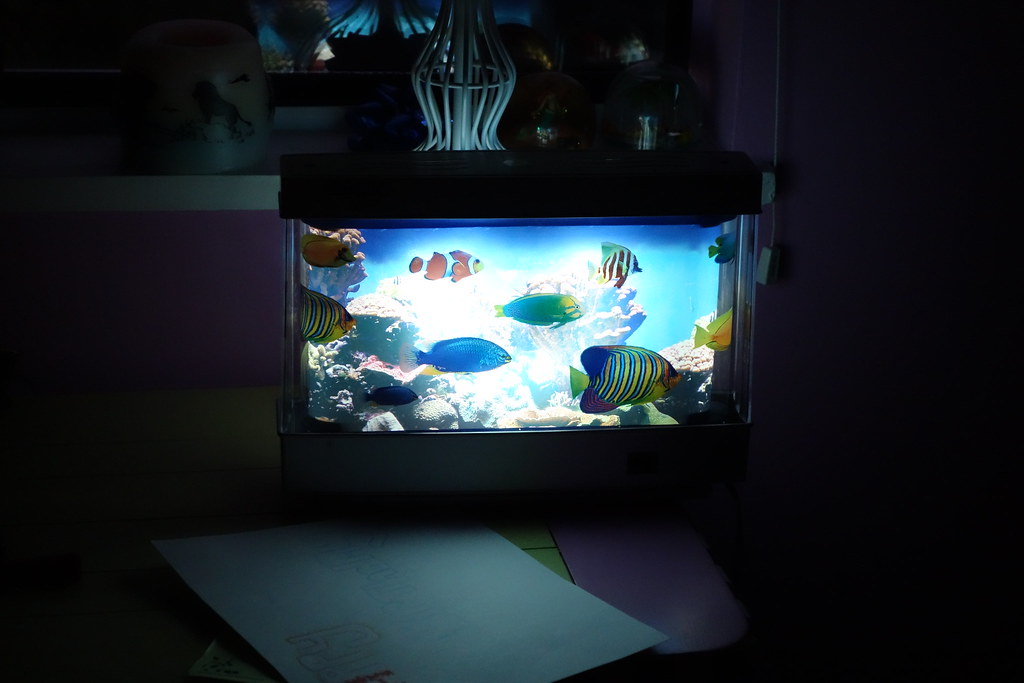
Low light test, Sony Alpha dslr versus Sony RX100.
For each camera, I took 1 shot fully auto, and 1 shot with some manual adjustment. (manually adjusted the ISO on the Alpha. On the RX100, switched to p mode and adjusted the iso).


20120821_12 by Havoc315, on Flickr


20120821_13 by Havoc315, on Flickr


20120821_50 by Havoc315, on Flickr


20120821_51 by Havoc315, on Flickr

The photos really show how much advances in technology have changed. My dSLR is a bit older -- About 6 years old. While I wouldn't have previously considered 6 years to be "old" for a camera -- I had my film SLR for over 10 years -- clearly there have been a lot of advancements in the recent years.

By far, the worst of the 4 pictures is the second one, taken with the DSLR with the ISO manually set to 1600. The last picture has the RX100, with ISO manually set to 1600. The RX100 produced a far superior picture -- When you look at the DSLR picture, it is very noisy (the picture is very grainy). So even with having a much bigger sensor, the older camera wasn't able to perform as well in low light/high ISO. I guess there have been significant advances in noise reduction.
Depending on what you were looking for, you can argue about which of the other pictures are the best of the lot. But the one where the lit aquarium is the clearest -- was taken with the RX100 on fully automatic (superior auto) mode. The camera analyzed the scene, and stacked 2 pictures together.

Now, I'd expect a brand new high quality DSLR to greatly outperform my 6-year-old DSLR. But I think it's quite interesting that the RX100 can quite clearly outperform the DSLRs of just a few years ago.

Now, if you really want to maximize your photography potential and education, there is no replacement for a large sensor/interchangeable lens camera. If I was starting from scratch, I might go with a mirrorless like the Nex series -- From what I've seen, it basically gives you the same quality, potential and flexibility as a dSLR, just without an optical viewfinder (which also makes it cheaper and smaller). While I like optical viewfinder (my apparently ancient dSLR doesnt even have an LCD viewscreen to compose pictures), I think I'd gladly sacrifice it for something smaller and cheaper.

I look at it like this:
For someone who really wants to master the art of baking, you should take some culinary classes, buy all the raw ingredients and fancy kitchen equipment. (.... the dSLR)

For someone who wants a really great "homemade" cake, I might suggest starting with a cake mix, and following a recipe for a really good icing and frosting. (The RX100).

For someone who really wants to master the art of photography, there is no replacement for a DSLR (or at least mirrorless system). For someone who is more interested in just getting consistently good results, the RX100 can work out very well.
 
Just one other piece of advice I'd add if you do go with the NEX...the kit lens should be of a fine quality, capable of delivering very good image quality across the range. However, every once in a while some folks report getting a bad one, and usually it's pretty clear - it's badly out of focus or blurry on one side in almost all shots. It doesn't happen often, but many of the comments you see on camera boards for the NEX where someone is reporting how they hate the kit lens, often it is due to the fact that they got a bad one. It's not uncommon nowadays with any camera brand to occasionally get a glitchy or bad one - do not hesitate to return or exchange the lens if you do get a bad one. The same goes for any camera you get - if yours isn't performing the way everyone else describes, and you run it through some tests as others instruct, you may find you got one with a problem and simply exchange it. I've heard of at least one RX100 being faulty (badly overexposing all the time), I've had a Canon S100 with issues in the family, and have seen NEX, Olympus OMD, Nikon D5100s, etc get returned due to an odd random problem. Product control isn't quite what it used to be! But exchange it and chances are you'll get one of the good ones.

Thanks so much for the tip! I will definitely look out for that, I would have had no idea that could happen.

The photos really show how much advances in technology have changed. My dSLR is a bit older -- About 6 years old. While I wouldn't have previously considered 6 years to be "old" for a camera -- I had my film SLR for over 10 years -- clearly there have been a lot of advancements in the recent years.

By far, the worst of the 4 pictures is the second one, taken with the DSLR with the ISO manually set to 1600. The last picture has the RX100, with ISO manually set to 1600. The RX100 produced a far superior picture -- When you look at the DSLR picture, it is very noisy (the picture is very grainy). So even with having a much bigger sensor, the older camera wasn't able to perform as well in low light/high ISO. I guess there have been significant advances in noise reduction.
Depending on what you were looking for, you can argue about which of the other pictures are the best of the lot. But the one where the lit aquarium is the clearest -- was taken with the RX100 on fully automatic (superior auto) mode. The camera analyzed the scene, and stacked 2 pictures together.

Now, I'd expect a brand new high quality DSLR to greatly outperform my 6-year-old DSLR. But I think it's quite interesting that the RX100 can quite clearly outperform the DSLRs of just a few years ago.

Now, if you really want to maximize your photography potential and education, there is no replacement for a large sensor/interchangeable lens camera. If I was starting from scratch, I might go with a mirrorless like the Nex series -- From what I've seen, it basically gives you the same quality, potential and flexibility as a dSLR, just without an optical viewfinder (which also makes it cheaper and smaller). While I like optical viewfinder (my apparently ancient dSLR doesnt even have an LCD viewscreen to compose pictures), I think I'd gladly sacrifice it for something smaller and cheaper.

I look at it like this:
For someone who really wants to master the art of baking, you should take some culinary classes, buy all the raw ingredients and fancy kitchen equipment. (.... the dSLR)

For someone who wants a really great "homemade" cake, I might suggest starting with a cake mix, and following a recipe for a really good icing and frosting. (The RX100).

For someone who really wants to master the art of photography, there is no replacement for a DSLR (or at least mirrorless system). For someone who is more interested in just getting consistently good results, the RX100 can work out very well.

Thanks for explaining the pictures. The last one looks great! I'm still trying to decide which of the "bakers" I am. I think I may try & read a book or two before I make a decision. Did you say you were going to Disney soon? (it may have been someone else) If it was you please post some pics from your trip. I know Disney is not the only judge of a camera but I figure if the pics there are good they will be good everywhere else too.
 
Thanks for explaining the pictures. The last one looks great! I'm still trying to decide which of the "bakers" I am. I think I may try & read a book or two before I make a decision. Did you say you were going to Disney soon? (it may have been someone else) If it was you please post some pics from your trip. I know Disney is not the only judge of a camera but I figure if the pics there are good they will be good everywhere else too.

I'll be there next week. I'll have my iPad with camera connection kit. Snapseed to make quick adjustments to pictures, and quick uploads. So hopefully, I'll be posting Disney images by late next week.

If budget wasn't an issue, I'd say get the RX100 for a day-to-day use camera, as well as for learning photography basics, but also getting a used DSLR camera for when you really want to concentrate on core photography. For that matter, you can get a film SLR really cheap-- And it would give a great education in photography. (You can get a Canon Rebel film body, or Minolta film body SLR camera on Ebay for about $15, but you would need to spend to get a lens).

The main downside of using a film camera as a photography *student* -- is the inability to immediately see your results.
 
I'll be there next week. I'll have my iPad with camera connection kit. Snapseed to make quick adjustments to pictures, and quick uploads. So hopefully, I'll be posting Disney images by late next week.

The main downside of using a film camera as a photography *student* -- is the inability to immediately see your results.

This is my exact worry. I'm not the most patient person but my kids will be in school soon so I will have some time to play around with my new camera & learn.

I can't wait to see some Disney pictures. I'll look forward to that.

Our budget is larger than what I was originally thinking. Don't know if it's a good or bad thing as it has opened up a whole new realm of possibilities!
 
This is my exact worry. I'm not the most patient person but my kids will be in school soon so I will have some time to play around with my new camera & learn.

I can't wait to see some Disney pictures. I'll look forward to that.

Our budget is larger than what I was originally thinking. Don't know if it's a good or bad thing as it has opened up a whole new realm of possibilities!

I will offer this... You should go to a store where you can really feel the cameras in your hand, snap the shutter. Many people love the feeling of the SLR in their hands, love the immediate click of the shutter. Other people may just find it bulky. My DW has always been a point & shoot person, she would never want a DSLR for herself, but whenever she gets her hands on my DSLR, she can't stop clicking. -- For her, the main reason is that typically, a DSLR focuses much much faster than a point & shoot. So the camera isn't constantly refocusing between shots. That said, the RX100 focuses very quickly --- for a point and shoot. I'd say under some conditions it focuses faster than my DSLR, but my DSLR is 6 years old. I know a brand new DSLR would focus faster than the RX100.
 
Thanks for explaining the pictures. The last one looks great! I'm still trying to decide which of the "bakers" I am. I think I may try & read a book or two before I make a decision.
You know, it's funny. There aren't too many people who have the latest and greatest of cameras every year. They often buy a system and stick with it for a good, long time. Sure, they upgrade from time to time. But when they do, they sell their "old" cameras to someone else (who presumably uses them), or, like myself, they keep the old one and use it as a backup, such as at times when switching lenses would be inconvenient. We also from time to time have people come on here who are buying older used cameras cause that's all they can afford. It is often a recommendation made to people who want a nice camera but are just starting out.

So what happens when all these people are walking around shooting with older cameras? ;) Are they getting terrible, inferior pictures? No, they're not - well, unless they're terrible photographers, lol. No, but seriously, they're probably going to work hard at learning and improving their skills as they go along, which will happen naturally as they see what works and what doesn't. This is pretty much how it is with most people wanting to learn. The process can be intimidating at times, and frustrating, but it's also fun, and the rewards are worth it when you begin getting pictures that people ooh and aah over. It's like riding a bicycle, too - once you learn how, you don't forget, and you can also transfer your skills to any bicycle.

But here's the real point I'm trying to make. Getting good pictures is really something you have to work at, at least a bit. Otherwise, and at the risk of getting flamed, :smokin: you are a "lazy" - and probably unrealistic - photographer. What do I mean by that?? :mad: Well, I mean that you (global you) think you'll pick up a camera and get fantastic pictures without putting any effort in at all. And I'll offer that what you'll likely get in that instance is snapshots, not really "works of art". (And granted, that may be all you want, and if that's the case, then more power to you!) But it doesn't have to be that way. With just a little bit of effort, you can get pictures that people ooh and aah over. (And the only person you may care about oohing and aahing is yourself, and that's ok, too! Although as photographers, we tend to be pretty critical of ourselves, and may always strive to do better regardless.)

As mentioned upthread, I've always used a camera system that has had a weak point (and they all have them) of greater noise at higher ISO. The way I worked around it, because I really loved the system, was to learn to shoot using lower ISOs and other principles of exposure and tools of the trade that were available to me (for instance, a tripod, noise reduction software, etc). If my pictures tend to be a little noisy, I'm ok with that - as long as they're otherwise really good (to me - pictures that *I* am happy with has always been my own personal goal). I am intrigued with the newest camera from my manufacturer that offers the latest and greatest sensor that is much better with noise at higher ISO. Does that mean I'm going to run out and buy it? Heck no! I don't HAVE to. If I want to, I can, and surely it might make my life easier and more exciting. But having learned to get the types of pictures I want already, the camera I use doesn't matter too much other than it has to be one I enjoy using, and those are my own. Noise is one factor that may be undesirable in photos, but there is so much more! As I said before - boring subject matter or no subject at all, poor lighting, crooked landscapes, poor focus, blur, etc., may all be more objectionable to the viewer.

To further illustrate my point above, I'm going to again refer to an article I posted a couple of days ago. It's a good article, demonstrating the use of prime lens vs a zoom lens. (That I posted for the OP to demonstrate the use of various lenses on the NEX vs a zoom lens on a pns.) I'm going to ask you to re-read it, but this time, substitute the concept of "zooming" with "high ISO".

http://www.picturecorrect.com/tips/how-a-prime-lens-can-improve-your-photography/

Done? What's my point? Sure, you can flip a switch, or use Intelligent Auto or whatever it's called, to brighten pictures. But is that really the best way? Or is it the "lazy" way? What about finding great light (with light being one of the most important aspects of a photo)? Finding great color, texture, visual interest? Striving for better composition, etc. Pointing and shooting will always be just that.

Since there are people here who are new to this and also want to learn some basics, I'm going to add this book to the link I posted earlier (reposted here as the second link). Don't laugh or discount Kodak cause they've been helping generations of people take better photos! These are really simple to read and will help you on the road to getting better pictures without being overwhelming. It's a good start. Take a look though some of the pages of the first book, it will echo a lot of what's being said here. Something to think about.

Kodak's How To Take Good Pictures: http://www.amazon.com/Take-Good-Pictures-Revised-Edition/dp/034539710X/ref=pd_sim_b_2

Kodak's Most Basic Book of Digital Photography: http://www.amazon.com/KODAK-Most-Bas.../dp/1579907628?tag=vglnkc5948-20
 
This ho hum snapshot...

P1010377e.jpg


... became these with just a little more effort.

P1226132n2-1.jpg


P1226139En-4.jpg


(Last two taken with an older camera; first taken with a newer one.)


Disney Vacation Planning. Free. Done for You.
Our Authorized Disney Vacation Planners are here to provide personalized, expert advice, answer every question, and uncover the best discounts. Let Dreams Unlimited Travel take care of all the details, so you can sit back, relax, and enjoy a stress-free vacation.
Start Your Disney Vacation
Disney EarMarked Producer


DIS Facebook DIS youtube DIS Instagram DIS Pinterest DIS Tiktok DIS Twitter
Add as a preferred source on Google

Back
Top Bottom