This is another in a series of threads focused on how to shoot different shows, attractions, rides, and events at Disney Theme Parks. The purpose is to help people learn how to shoot those things with their camera and what they can reasonably expect from their camera.
On this forum, we run the gamut from cell phone cameras to high end DSLRs with rediculously large lenses. I'm hoping that we'll get a variety of posts from people with cameras in all ranges. Even if you feel that your photos don't measure up to what others have posted, please post some samples anyway. We're all at different levels of gear and skill and we can all learn from each other. A typical S3 user will probably learn more from your S3 shot than they will from a pro's latest DSLR masterpiece.
Other posts in this series include:
How To Shoot: Fireworks
How To Shoot: The Safari Ride
How To Shoot: Parades
How To Shoot: Indoor Shows
How To Shoot: Cinderella's Castle
How To Shoot: Dark Rides
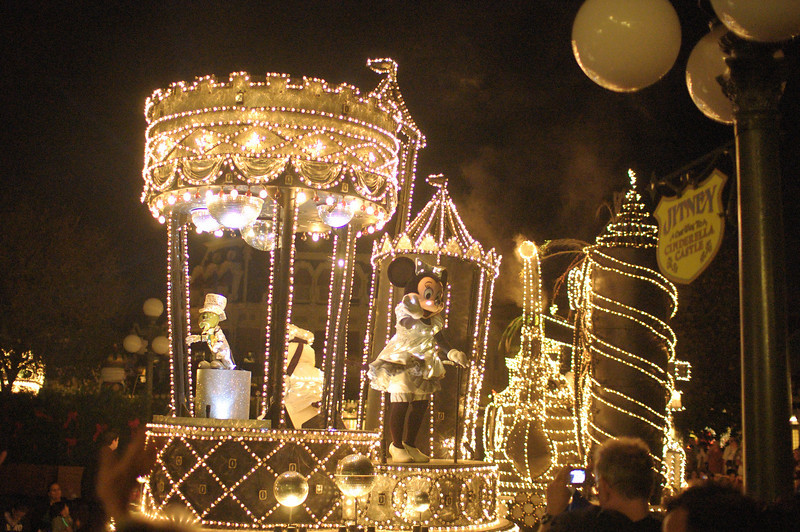
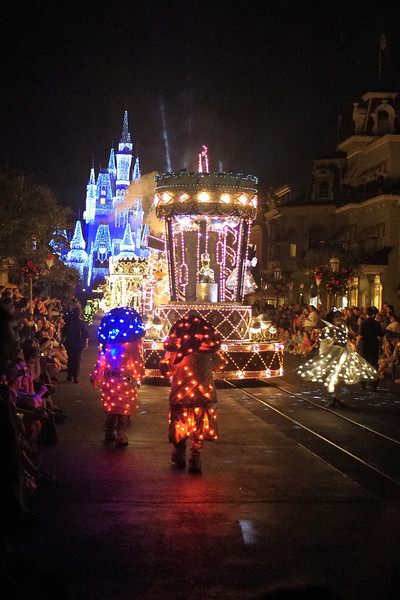
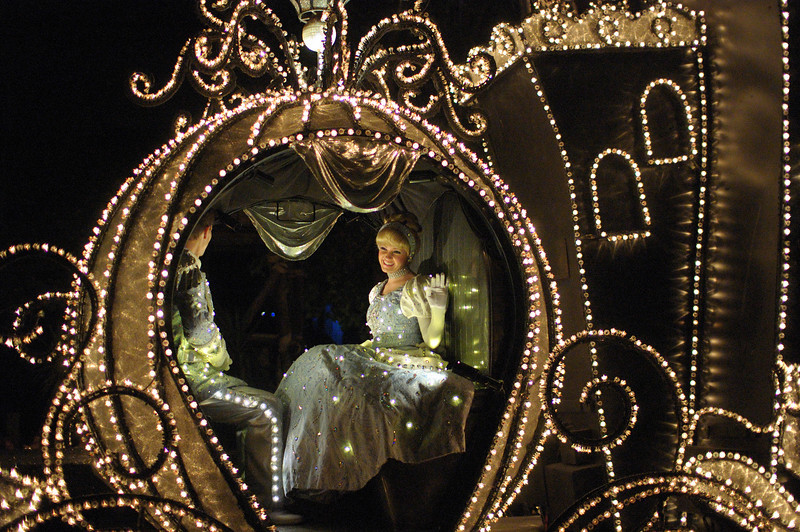
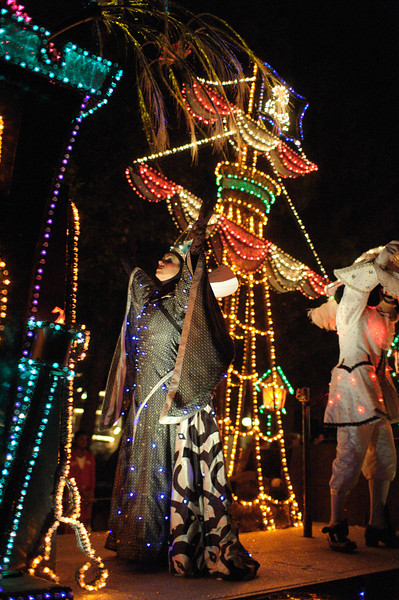
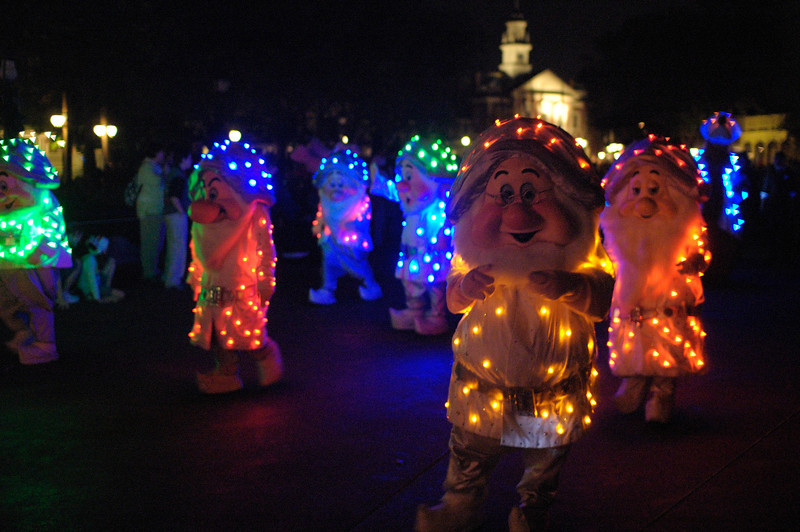
How do you shoot light parades like SpectroMagic? Favorite locations? Special camera settings? Lens suggestions?
Getting good shots of SpectroMagic is one of the biggest challenges in photographing the Magic Kingdom. It combines the motion of a parade with the difficulty of shooting at night. A stabilizer, like a tripod or stabilization system, will help, but it won't stop the motion. The biggest problem is getting a fast enough shutter speed to stop the motion.
My first suggestion is to shoot at as high of an ISO as your camera is capable (with acceptable results). Perhaps the latest round of high sensitivity cameras will be better off holding back to 1,600 or 3,200 ISO, but for most cameras I think higher is better. The pictures will be noisy (grainy, little colored blotches), but that is better than blurry.
My second suggestion, for those with DSLRs, is to use your fastest lens. You'll have to deal with shallower DOF and you may have to give up zooming. Again, getting a high enough shutter speed to keep things from blurring is paramount. Having lots of depth of field isn't of much use if your subject is blurry.
You might be tempted to use a flash. It is dark, after all. That doesn't work very well for the light parades. The flash illuminates the parts of the parade floats that are
supposed to be dark and it competes with the colored lights. That's why they run this parade during the night and not the daytime. If you can minimize the power of your flash, it might be useful for a few floats, but I would avoid it altogether unless you are pretty experienced.
Try shooting wider than you normally would. Just like wide angle lenses makes your subject look smaller, it also makes their movement smaller. That means that you can get away with a longer shutter speed than you can when you are zoomed in.
Most cameras seem to meter the parade surprisingly well. I say surprisingly, because it seems like a tough metering problem. The scene is mostly dark except for lots of little colored lights. The cameras seem smart enough to realized that you want the colored dots and they expose for that. Just to be sure, review a few of your pictures early in the parade. If it is overexposing, add some exposure compensation or switch to manual mode.
Make sure that you enjoy the show and don't spend all of your time trying to get the perfect shot. The parade has such great atmosphere and music. It would be a shame to not soak it in because you were too focused on getting perfect shot.
Getting really good shots of the parade is a really tough challenge. If you or your gear are not up to the task, don't despair. Borrow (with permission, of course) some other people's shots for this segment and concentrate on getting shots that no one else can get - your family and friends.


 [/EDIT]


 ) I plan on making great use of my Canon S3. I have been practicing every chance I get, but I come to the experts for some specific help. Two of my fav attractions at MK are SpectroMagic and Small World- laughing can cease now
  . Anyhoo, I would love to have a couple decent shots of these. For spectro I assume that a tripod is in order. I have a gorilla pod which I am loving so far. Can anyone give me some setting suggestions? I plan on lining up early for a good place to set up the pod. For Small World I think I am stumped due to the lighting in there. I just love all the colors of the ride and would love to capture those. Any help would be awesome