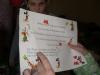
Frustrated - but the lesson continues!

Coach81

DIS Veteran
Joined
Feb 14, 2007
Messages
4,457
So I went outside today to experiment with my new Nikon D5000 camera..I tried taking some shots while the sun was setting...

I set my camera to a low aperture- around F-5 I believe.. and I started snapping some pictures.. most of them came out kinda blurry as there was a few second delay on the camera taking the picture.

When I set the dial to sunset.. there was a very short delay and the picture came out much better..

Some of my shots did not come out at all.. even when I tried to use the flash..

Got me thinking...

So will I always have to just use the "camera settings" to get the most out of my camera? Part of the reason I bought the camera was in the hopes of me setting it on some type of manual setting (A, P, S, or M etc..) and having the skill, knowledge and technique to take some really nice pictures.

With my old Sony Point and Shoot.. I could have snapped all of those shots really quick.. and all or most would have come out.. granted they probably would have been pretty blurry, but at least I would have gotten the shot off.

So let me get to the point:

I like the challenge of learning how to take good pictures..

I would like to one day have all the knowledge and ability to really take some nice shots.. However..

If I want to take night pictures for example.. will I ALWAYS have to use a tripod to get decent shots?

I'm just wondering if perhaps this camera isn't for me???

Ultimately I would like to be able to take this camera on vacation.. and everywhere and be able to just snap shots.. perhaps every now and then go for a "great shot" all on my own..

Just kind of frustrated right now and wondering if I made the right decision..

I welcome your comments, thoughts, and suggestions..
 
It sounds like you are having problems getting the focus locked unless you accidentally set the two second delay??? Try using the half press to lock the focus on what you want in focus and then recompose for the shot. If the is a delay when doing that, then you might have set the delay b/c that should be an instant response.
 
Dear Frustrated,

a lot of new dSLR users have trouble and I tell them to stay with Program or Auto until they are *very* comfortable with other settings. This may not select the absolute best settings (although Program is the setting I use for almost all photos) but it will give good exposures almost always.

The delay may be a shutter delay setting that is set incorrectly, or it may be the camera finding little to focus on and taking a long time. SLRs need an area of high contrast to focus quickly.

As for night photos, a tripod is not always needed but without a fast lens it sure helps.
 
Coach, the learning curve can be difficult at first. Once you have an understanding of how your aperture, shutter speed and ISO all work and how they work together it will be easier for you to determine what the appropriate combinations of the three will be right for your given shot.
Check for a shutter delay, as ukcatfan mentioned.
Your blur may have been a result of a too slow shutter speed which can manifest itself as camera movement, or a bad focus or combination of the two. for slower shutter speeds you would want a tripod but that doesn't necessarily mean every shot will need a tripod by any means, nor that every shot will come out poorly.
One of the best things you can do for yourself is to read Understanding Exposure and practicing - a lot - take photos of everything, with different settings, and see how they differ from one another, just by changing shutter speeds and apertures. Remember your ISO is key in the equation, as well. If you would post a shot and the exif info, it will help a lot in determining what may have gone wrong.
 

It sounds like your shutter speed was to slow. Remember that all images rely on a combination of shutter speed, aperture and ISO. Its generally referred to as the photographic triangle. If you set the camera on automatic and it reads low light, it will normally keep the shutter open longer (slow shutter speed) which leads directly to blurring. When you are in low light (or in any situation) and this occurs you will need to make an adjustment, ie, stabilize the camera (tripod or something to set it on) or raise the ISO or open the aperture. This is probably the hardest concept to accept or understand. Once you learn that, everything else starts to fall into place. Bryan Peterson in his book Understanding Exposure hits this real hard. This is where it finally dawned on me what everyone was talking about. I would implore you to get this book and read it cover to cover. Its only 160 pages long with big pictures. After that book, the camera manual started making sense. Also Magic Lantern has a series of books specific to your camera which I think is easier to understand than the camera manual. You have a very good camera, so now it comes back to the photographer. Give yourself some time, and study and practice. It will come, I guarantee it. You won't be sorry. Good luck.
 
Coach, the learning curve can be difficult at first. Once you have an understanding of how your aperture, shutter speed and ISO all work and how they work together it will be easier for you to determine what the appropriate combinations of the three will be right for your given shot.
Check for a shutter delay, as ukcatfan mentioned.
Your blur may have been a result of a too slow shutter speed which can manifest itself as camera movement, or a bad focus or combination of the two. for slower shutter speeds you would want a tripod but that doesn't necessarily mean every shot will need a tripod by any means, nor that every shot will come out poorly.
One of the best things you can do for yourself is to read Understanding Exposure and practicing - a lot - take photos of everything, with different settings, and see how they differ from one another, just by changing shutter speeds and apertures. Remember your ISO is key in the equation, as well. If you would post a shot and the exif info, it will help a lot in determining what may have gone wrong.

It sounds like your shutter speed was to slow. Remember that all images rely on a combination of shutter speed, aperture and ISO. Its generally referred to as the photographic triangle. If you set the camera on automatic and it reads low light, it will normally keep the shutter open longer (slow shutter speed) which leads directly to blurring. When you are in low light (or in any situation) and this occurs you will need to make an adjustment, ie, stabilize the camera (tripod or something to set it on) or raise the ISO or open the aperture. This is probably the hardest concept to accept or understand. Once you learn that, everything else starts to fall into place. Bryan Peterson in his book Understanding Exposure hits this real hard. This is where it finally dawned on me what everyone was talking about. I would implore you to get this book and read it cover to cover. Its only 160 pages long with big pictures. After that book, the camera manual started making sense. Also Magic Lantern has a series of books specific to your camera which I think is easier to understand than the camera manual. You have a very good camera, so now it comes back to the photographer. Give yourself some time, and study and practice. It will come, I guarantee it. You won't be sorry. Good luck.

I have that book coming in any day from Amazon..

Update.. for more info..

I purposely turned off all AF.. I went all manual..no AF and no Vibration help whatsoever..


Further update..

I thought about it.. and then remembered some of the stuff I had been reading... and it hit me... ISO SETTING!!!!

So I went into my settings.. and checked.. it was set to drumroll...

200 :lmao:

I'm actually excited that I know enough that that is WAY TOO LOW for even moderately shaded.. much less 9 pm....

So I started tweeking it a bit.. and whamo.. my pictures got better and better.. the last one I took came out almost decently.. here are a few examples:

First needs no intro...
DSC_0023.jpg


Second and third are the "best" without ISO adjustment..
DSC_0035.jpg

DSC_0039.jpg


And now with the ISO adjust ment.. remember all of these shots were taken with no tripod.. and no flash.. and no use of AF or antivibration..

DSC_0041.jpg


I know the last picture is far from a "good" one.. but from where it came from.. I was very excited!!! I am now very excited because now I feel as if I turned a small corner in my photographic journey..
 
Sorry to get off topic here but "Nice Bike"... What is it?? :thumbsup2
 
Sorry to get off topic here but "Nice Bike"... What is it?? :thumbsup2

OH :rotfl2:

Np... that is actually my next door neighbor's Road Bike. His lighted garage was perfect for my "experimentation" tonight. I'm not exactly sure what kind it is... but I can certainly find out if you'd like.
 
I thought about it.. and then remembered some of the stuff I had been reading... and it hit me... ISO SETTING!!!!

So I went into my settings.. and checked.. it was set to drumroll...

200 :lmao:

I'm actually excited that I know enough that that is WAY TOO LOW for even moderately shaded.. much less 9 pm....

So I started tweeking it a bit.. and whamo.. my pictures got better and better.. the last one I took came out almost decently.. here are a few examples:
OK, so, now: Quiz

If you know that the three things that make up an exposure are aperture, shutter speed and ISO, what, besides ISO, might you have done to get the same exposure you got by raising the ISO? :teacher:
 
OK, so, now: Quiz

If you know that the three things that make up an exposure are aperture, shutter speed and ISO, what, besides ISO, might you have done to get the same exposure you got by raising the ISO? :teacher:

HMMM

I could have opened the lens up to max size (lowest f number possible) thus allowing more light in??

Am I close.?
 
HMMM

I could have opened the lens up to max size (lowest f number possible) thus allowing more light in??

Am I close.?

That's the correct answer but in that last picture you opened the aperture as far as it would go at 55mm. The only option there would have been to walk closer and use a wider angle setting allowing you access to lower apertures.
 
I would say that those shots you are trying to get are certainly tripod type shots. The second and third ones are shot at 2 second and 1/1.3 second shutter speeds. This cannot be done hand held in almost all circumstances, even with 55mm focal length.

Get yourself either a tripod or try setting your camera on something stable and try the same shots. Even with the ISO at 200, you should see a remarkable improvement.
 
Just kind of frustrated right now and wondering if I made the right decision..
Don't give up. It can be very frustrating at first. Many of us have also been there, too. You need to put some time and learning in and there will absolutely be more frustrations along the way. But once it starts making sense, it opens a whole new world to you. You got into it somewhat quickly so know that it's going to take you some time. Give it at least a few months and you'll be in a very different place. You have a great camera there to start.
 
OK, a few comments.

So I went outside today to experiment with my new Nikon D5000 camera..I tried taking some shots while the sun was setting...

I think you chose a challenging time to shoot. It might be better to start in the daytime to get a feel for your camera - first. Low light and nighttime shots are challenging for everyone. You will do better with those once you understand more. A cloudy day is a good time to try. (Bright sunlight can be difficult, too.) One of the best tips I ever read was to first find good light, and then find your subject. That's served me pretty well, especially at the beginning - before I really understood how it all works. You can get some beautiful shots and lovely colors on an overcast day.

I set my camera to a low aperture- around F-5 I believe.. and I started snapping some pictures.. most of them came out kinda blurry as there was a few second delay on the camera taking the picture.

When I set the dial to sunset.. there was a very short delay and the picture came out much better..
With the preset auto modes, the camera picks the settings for you and you can't usually change them. Getting a better picture this way was a hint that you could do the same yourself once you figure out how (study the settings). When you set them yourself, you can be more creative, which is why some people prefer to use their own settings than the preset ones. But they absolutely come in handy, especially when you're learning and need a good shot.

The few second delay you mention was the camera trying to get the shot. But it didn't have help and was working hard. How could you have helped it? These are the things your brain starts thinking about when you're learning photography principles, like that darned exposure triangle again. ;) Yes, a tripod or other steady surface would have helped because the camera would have stayed perfectly still while the shutter was open longer. It's very difficult to keep the camera as still as it needs to be during a low light shot. You would be surprised at the results if you'd done this - even with a point and shoot. Nice and clear even if dark. Repeat after me: "You don't need no stinkin flash". :teeth:

And yes, if your lens had a larger aperture, you could have tried that. (Which is why people often move to lenses with large apertures, aka "fast" lenses, which can be pricey.) Or increased the shutter speed, but again, you'd need a steady surface (will avoid the T word, lol). Increasing the ISO is an option, but know that when you do, you'll often grapple with Noise, which is the graininess of pictures taken on a high ISO setting.

So will I always have to just use the "camera settings" to get the most out of my camera? Part of the reason I bought the camera was in the hopes of me setting it on some type of manual setting (A, P, S, or M etc..) and having the skill, knowledge and technique to take some really nice pictures.

I like the challenge of learning how to take good pictures..

I would like to one day have all the knowledge and ability to really take some nice shots.
Like I mentioned in an earlier post, only you can decide how much you want to put into this and whether it's for you or not. Some people do buy a dSLR and primarily use the auto settings. And others make a study of it and really get into it once they figure it out. And there are others somwhere in between. It really does come together with time and effort, but it doesn't happen overnight. It sounds to me like you're someone who really enjoys photography so - regardless of what camera you use - learning some basic principles will improve your pictures altogether. But if you're an immediate gratification type person then it might prove difficult for you if you want great pictures right away.

My suggestion would be to not throw in the towel yet. You need to give it some time. Read. Practice. Read some more. Practice some more. Post pics here like you've done, for suggestions. Read and practice some more. Once it clicks, it really clicks, and you'll have those skills forever. And the pictures you get will be way better than any you could have taken with your point and shoot w/ flash. :lovestruc
 
That's the correct answer but in that last picture you opened the aperture as far as it would go at 55mm. The only option there would have been to walk closer and use a wider angle setting allowing you access to lower apertures.
YEAH.. I got it right!!! Thanks for the suggestion.. I am learning more and more..
Don't give up. It can be very frustrating at first. Many of us have also been there, too. You need to put some time and learning in and there will absolutely be more frustrations along the way. But once it starts making sense, it opens a whole new world to you. You got into it somewhat quickly so know that it's going to take you some time. Give it at least a few months and you'll be in a very different place. You have a great camera there to start.

I'm not going to give up.. last night I learned a lesson.. I need to realize that this will not be "easy".. I do have my book coming in.. and I also need to realize that this will take some time, and a lot of practice..

Thanks to everyone here for your help, expertise, and support.
 
YEAH.. I got it right!!! Thanks for the suggestion.. I am learning more and more..


I'm not going to give up.. last night I learned a lesson.. I need to realize that this will not be "easy".. I do have my book coming in.. and I also need to realize that this will take some time, and a lot of practice..

Thanks to everyone here for your help, expertise, and support.

I wouldn't say it's not going to be easy. Really it will become second nature after enough practice. Sure I still forget that I had set exposure compensation or flash exposure compensation once in a while, but that's a quick fix. Trust me, play around with it, especially in real world situations(go outside!) and you'll get the hang of it quickly.
 
OK, a few comments.


I think you chose a challenging time to shoot. It might be better to start in the daytime to get a feel for your camera - first. Low light and nighttime shots are challenging for everyone. You will do better with those once you understand more. A cloudy day is a good time to try. (Bright sunlight can be difficult, too.) One of the best tips I ever read was to first find good light, and then find your subject. That's served me pretty well, especially at the beginning - before I really understood how it all works. You can get some beautiful shots and lovely colors on an overcast day.


With the preset auto modes, the camera picks the settings for you and you can't usually change them. Getting a better picture this way was a hint that you could do the same yourself once you figure out how (study the settings). When you set them yourself, you can be more creative, which is why some people prefer to use their own settings than the preset ones. But they absolutely come in handy, especially when you're learning and need a good shot.

The few second delay you mention was the camera trying to get the shot. But it didn't have help and was working hard. How could you have helped it? These are the things your brain starts thinking about when you're learning photography principles, like that darned exposure triangle again. ;) Yes, a tripod or other steady surface would have helped because the camera would have stayed perfectly still while the shutter was open longer. It's very difficult to keep the camera as still as it needs to be during a low light shot. You would be surprised at the results if you'd done this - even with a point and shoot. Nice and clear even if dark. Repeat after me: "You don't need no stinkin flash". :teeth:

And yes, if your lens had a larger aperture, you could have tried that. (Which is why people often move to lenses with large apertures, aka "fast" lenses, which can be pricey.) Or increased the shutter speed, but again, you'd need a steady surface (will avoid the T word, lol). Increasing the ISO is an option, but know that when you do, you'll often grapple with Noise, which is the graininess of pictures taken on a high ISO setting.


Like I mentioned in an earlier post, only you can decide how much you want to put into this and whether it's for you or not. Some people do buy a dSLR and primarily use the auto settings. And others make a study of it and really get into it once they figure it out. And there are others somwhere in between. It really does come together with time and effort, but it doesn't happen overnight. It sounds to me like you're someone who really enjoys photography so - regardless of what camera you use - learning some basic principles will improve your pictures altogether. But if you're an immediate gratification type person then it might prove difficult for you if you want great pictures right away.

My suggestion would be to not throw in the towel yet. You need to give it some time. Read. Practice. Read some more. Practice some more. Post pics here like you've done, for suggestions. Read and practice some more. Once it clicks, it really clicks, and you'll have those skills forever. And the pictures you get will be way better than any you could have taken with your point and shoot w/ flash. :lovestruc

Thank you, Pea.. I really appreciate all your time and encouragement!
 
I wouldn't say it's not going to be easy. Really it will become second nature after enough practice. Sure I still forget that I had set exposure compensation or flash exposure compensation once in a while, but that's a quick fix. Trust me, play around with it, especially in real world situations(go outside!) and you'll get the hang of it quickly.

Well I'm preparing myself for a very long, and hopefully fullfilling amatuer photographic career.. I hope that this can become another satisfying hobby.

I will get outside this weekend and practice.. thanks so much!
 
Well I'm preparing myself for a very long, and hopefully fullfilling amatuer photographic career.. I hope that this can become another satisfying hobby.

I will get outside this weekend and practice.. thanks so much!
s


Practice is the key. The more you use your camera the more second nature it becomes for you. In no time you will look at a scene and say...ok f/8 or i'll need 1/500 sec for this.

Learning is half the fun :thumbsup2
 
My first major outing with my dSLR was also my first trip to WDW. I had used a film SLR for years, but when I had kids I moved to P&S's first film and then digital. I had forgotten much of what I knew at one point.

The results were shall we say less that steller.
http://ghsportphoto.com/Travel/Disney/Disney-World-06/1884888_rPyDt#94955785_aMNxf

probably 75% of what is in this gallery wouldn't have even made it past my first delete phase of post processing at this point, but I keep it to remind myself of my progression

So, if your feeling a little overwhelmed, here's something to take a look at and know that it will get better as you learn

http://ghsportphoto.com/Travel/Disney/Disney-World-06/1884888_rPyDt#94955785_aMNxf


Disney Vacation Planning. Free. Done for You.
Our Authorized Disney Vacation Planners are here to provide personalized, expert advice, answer every question, and uncover the best discounts. Let Dreams Unlimited Travel take care of all the details, so you can sit back, relax, and enjoy a stress-free vacation.
Start Your Disney Vacation
Disney EarMarked Producer


DIS Facebook DIS youtube DIS Instagram DIS Pinterest DIS Tiktok DIS Twitter

Add as a preferred source on Google

Back
Top Bottom