First, tape their feet to the ground. Give them some valium...wait 30 minutes, then photograph them all you want.

Pets definitely love to move - even when they're sitting still - little flicks of the head, movements of the nose, eyes darting about, ears swiveling...there's always something moving on an animal.
There is not a right or wrong way to photograph pets, in the arguments between flash or natural light - it's all down to preferences. Personally, though I have a good hotshoe flash with wireless control I use for event shooting, I have no interest in using it for pet shots - I just happen to love using available light for the moodiness, the shadows, the color casts, and style. It's a preference, and nothing more.
However, for this type of shooting, the key is keeping the shutter speed fast enough to get the shot without blur - which usually means high ISO and/or fast wide apertures...usually both. For me, I love using fast lenses because I love the shallow depth of field effect. Still, many times I'll use an aperture of F1.4 to F2, and still need ISO1600, 3200, even 6400 to get the shot.
My suggestion would be if you like natural light photography, to get a nice, fast prime lens. Even a cheapie, like a 50mm F1.8 or so, should significantly improve your shots...and you can learn to play with that shallow depth of field effect, where only part of the animal will be in focus for intense closeups and nicely blurred backgrounds. If the pet is running or moving fast, keep the shutter speeds above 1/400 at least...if they're sitting still, you probably still want to be around 1/100 to 1/200 most of the time, to account for all the little flinchy movements they make.
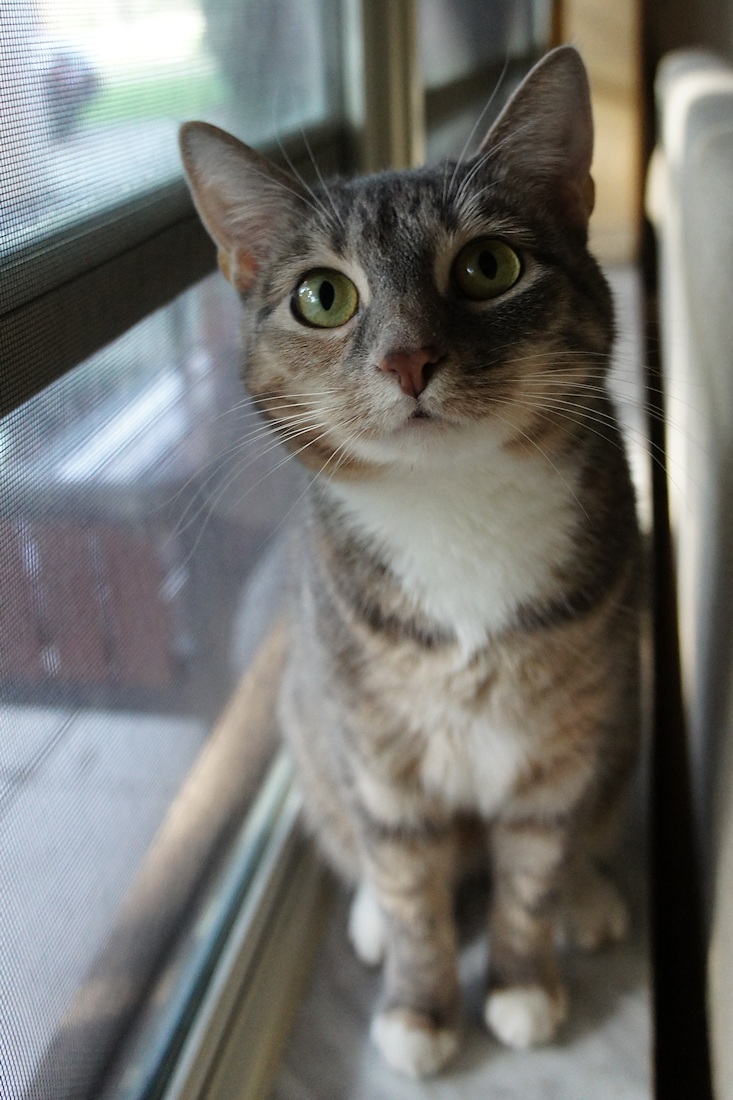
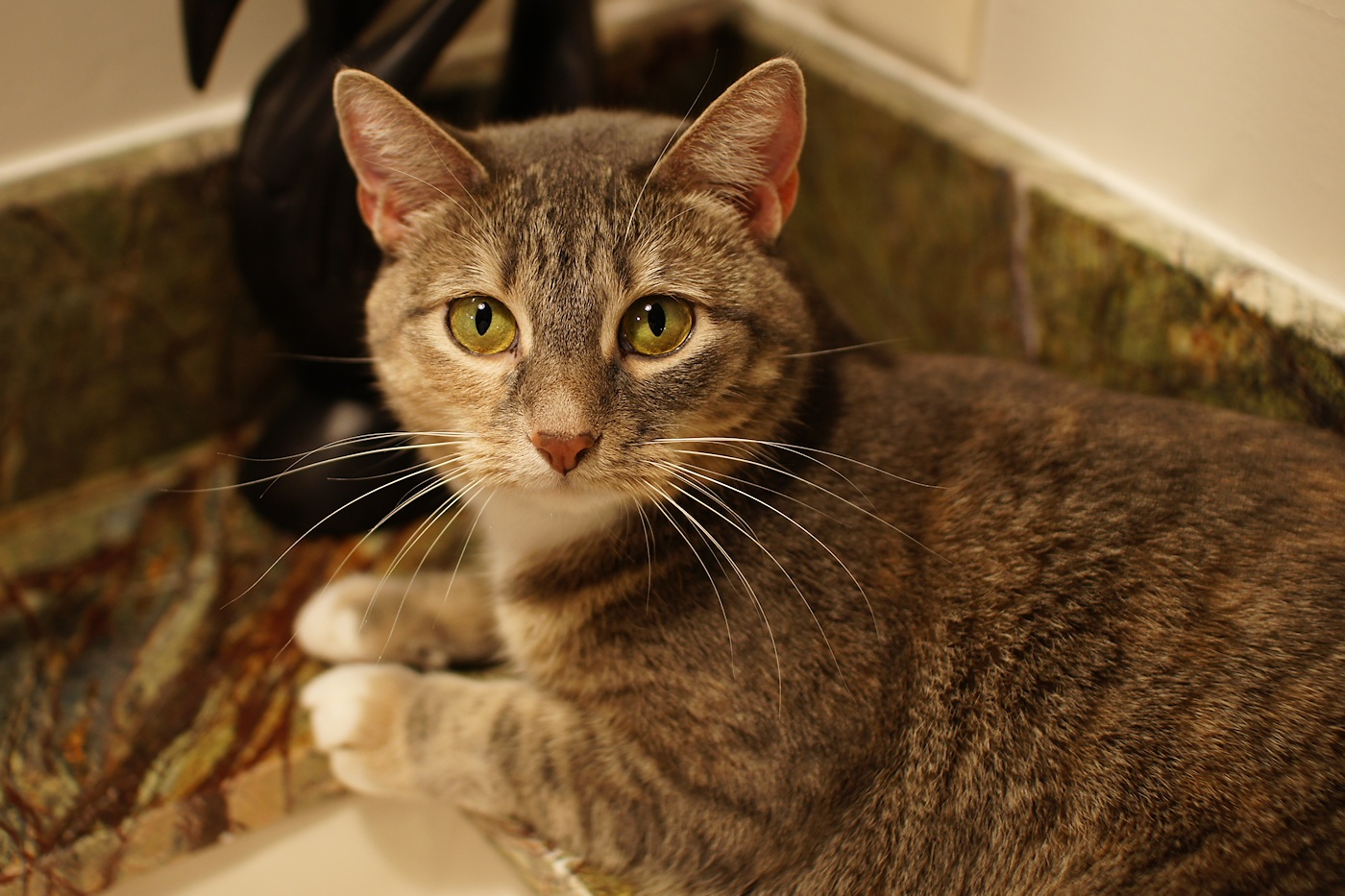
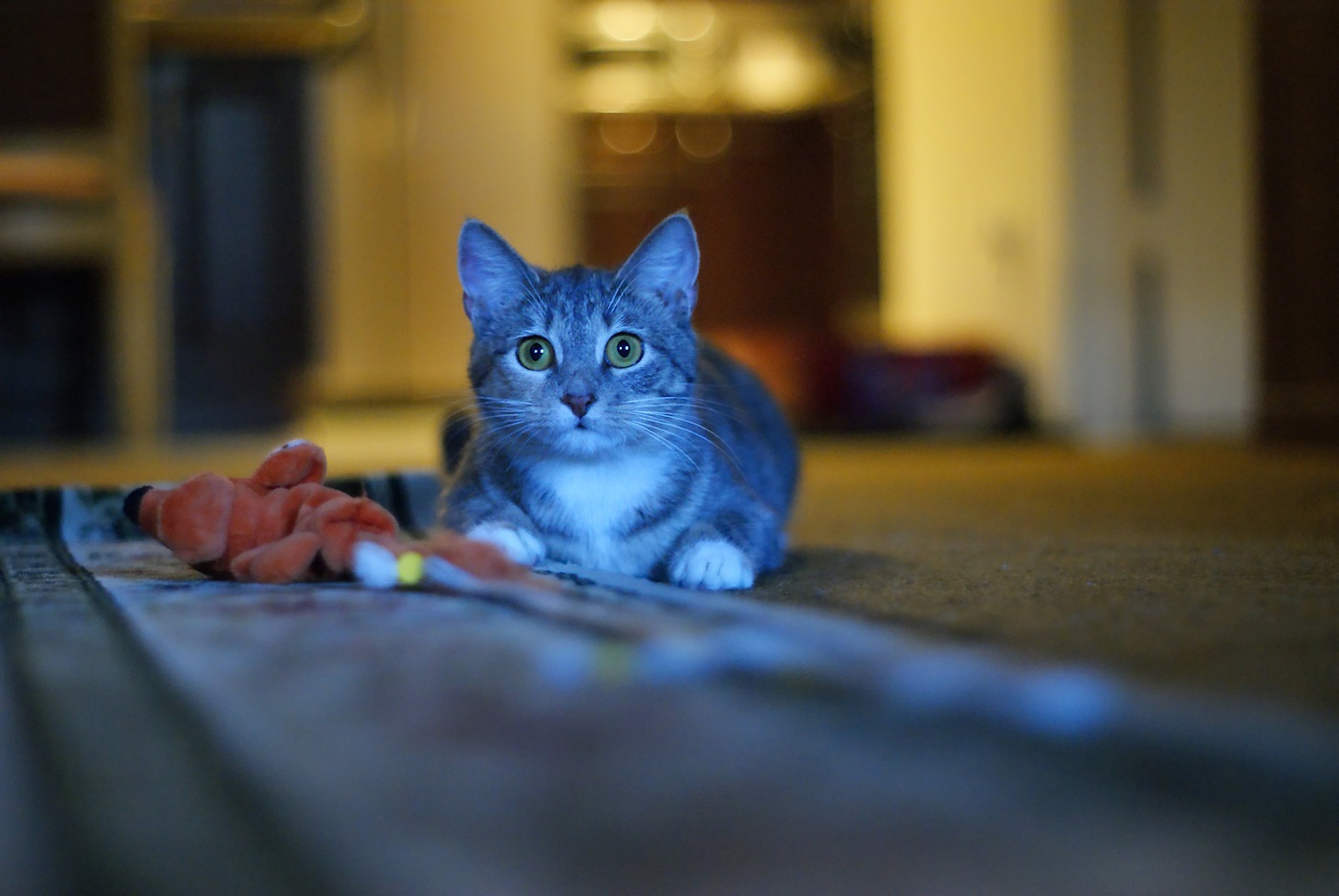
Some available light, high ISO, and fast aperture snaps of my cat, to show the types of pet portrait I like:
ISO6400, F4:
ISO1600, F3.5:
If the light's decent, you can get away with ISO200 and a fast aperture (F2):
Outdoors running around, sometimes even 1/500 shutter is borderline with a fast cat:
ISO1600, F1.7, by the light of the TV nearby: